
Substance use disorders: Clinical guidance and practice resources

Comprehensive resources for family physicians to identify and manage substance use disorders.
Substance use is widespread in the United States. In 2023, more than 134 million Americans age 12 and older reported consuming alcohol in the past month, and more than 20% of them had an alcohol use disorder. More than 64 million people reported using a tobacco or nicotine vaping product in the past month, and some 47 million said they'd used illicit drugs, according to the National Center for Drug Abuse Statistics.
Patients struggling with opioid and other substance use disorders often rely on their family physicians to offer support and help them find the resources they need. This page features evidence-based strategies to promote behavior change and lead to positive patient outcomes as you provide office-based prevention, diagnosis and treatment.
Guidelines and recommendations
Clinical preventive service recommendations
The USPSTF concludes that the current evidence is insufficient to assess the balance of benefits and harms of primary care–based behavioral counseling interventions to prevent illicit drug use, including nonmedical use of prescription drugs, in children, adolescents and young adults.
See the full recommendation for more information.
The USPSTF recommends screening for unhealthy alcohol use in primary care settings in adults 18 or older, including pregnant women, and providing persons engaged in risky or hazardous drinking with brief behavioral counseling interventions to reduce unhealthy alcohol use.
See the full recommendation for more information.
The USPSTF recommends screening adults 18 and older for unhealthy drug use when services for diagnosis, treatment, and follow-up are available. The USPSTF concludes that the current evidence is insufficient to assess the balance of benefits and harms of screening for unhealthy drug use in adolescents.
See the full recommendation for more information.
Americans age 12 and older who have used illegal drugs or misused prescription drugs within the last year (70.5 million people).
Fetal alcohol spectrum disorders (FASDs)
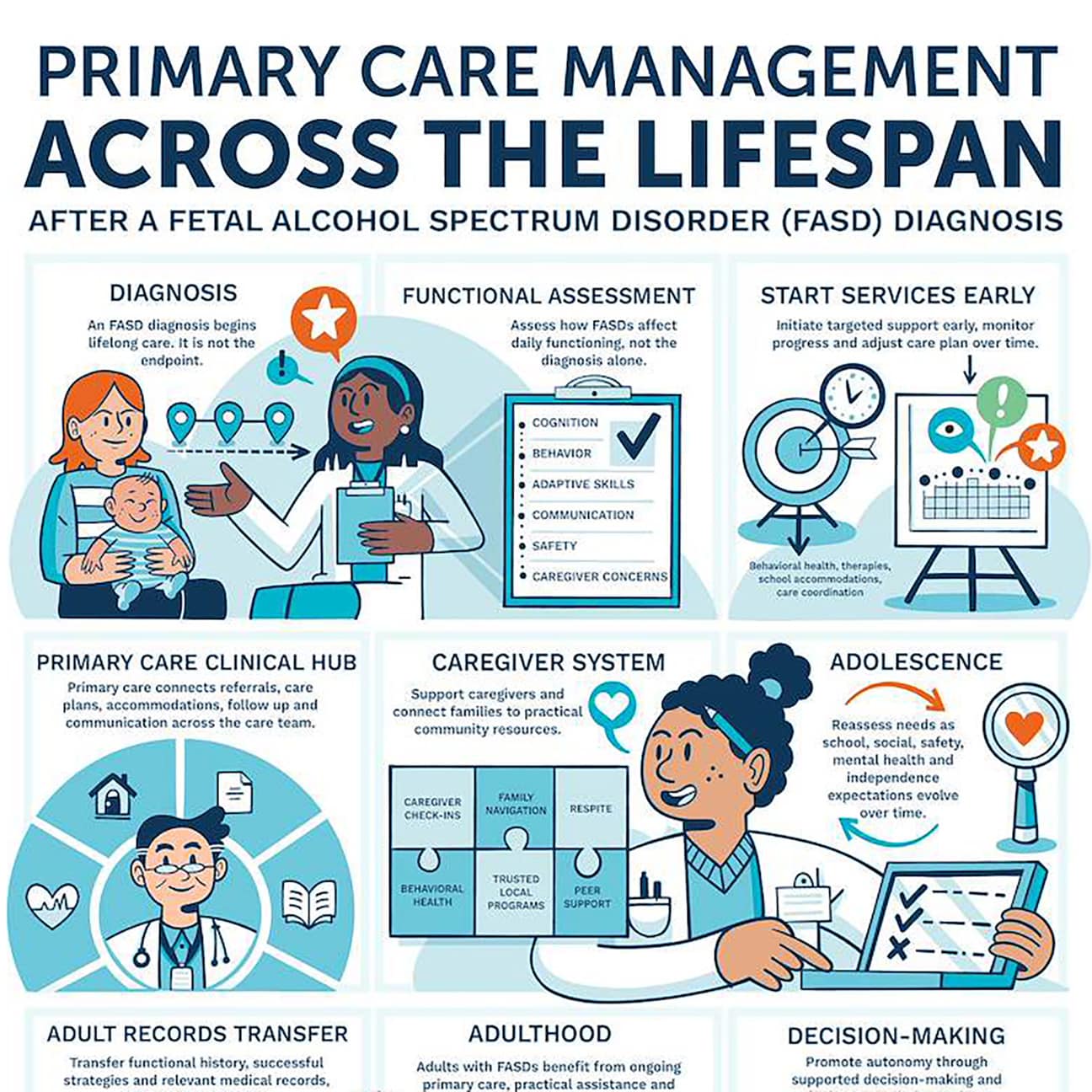
Steps to translate an FASD diagnosis into a care plan
View the handout in English
View the handout in Spanish
What to do after an FASD diagnosis
Alcohol use during pregnancy and fetal alcohol spectrum disorders | Educational supplement
Inside Family Medicine podcast
AAFP Chief Medical Officer and Senior Vice President of Education, Inclusiveness and Physician Well-Being Margot Savoy, MD, MPH, FAAFP, welcomes back Jeffrey Quinlan, MD, FAAFP, to discuss his AAFP work on FASDs and substance use in pregnancy. The conversation covers primary care screening and early identification using exposure history and clinical signs, common diagnostic frameworks, multidisciplinary care coordination and prevention through routine screening, preconception counseling and stigma reduction.
In this episode of Inside Family Medicine, Jeffrey Quinlan, MD, FAAFP, a family physician and academic leader discusses his work with AAFP on FASD and delves into the rising concerns about cannabis use during pregnancy. He highlights the impact of alcohol and cannabis on maternal and child health, the importance of preconception counseling and effective strategies for family physicians to screen and counsel patients about substance use during pregnancy.
Tobacco use—including e-cigarettes—remains the leading preventable cause of disease, disability and death in the United States. Vaping, particularly among youth and adolescents, has added a new, urgent challenge for primary care providers.
Help your patients stop smoking, or prevent them from starting, with this comprehensive toolkit.
Tobacco and nicotine use: clinical guidance and practice resources
Screening for alcohol use can be complicated by the co-use of other substances, like tobacco and illicit drugs. Learn more about how to identify and manage alcohol use disorders in your patients.

Opioid Response Network
Throughout the U.S., states, local communities, and neighborhoods, are experiencing an unprecedented increase in the number of opioid-related deaths. In response to this healthcare crisis, the American Academy of Addiction Psychiatry (AAAP) and its coalition of 27 national healthcare partner organizations, including the AAFP, formed the Opioid Response Network, formerly known as the STR-TA consortium, to provide training and technical assistance across the country focusing on the local level needs.
This initiative, funded by the Substance Abuse and Mental Health Services Administration, utilizes experienced prescribers and clinicians, including family physicians, in prevention, treatment, and recovery who are collaborating to facilitate access to evidence-based resources.
All 50 states and 7 territories have a designated Opioid Response (STR-TA) team, led by a Regional Technology Transfer Specialist (TTS), who coordinates the implementation of evidence-based practices. Family physicians and other additional consultants are also available to meet the requester's specific needs. Anyone can request technical assistance.
Encourage your chapter to host a substance use disorders (SUD) training using the substance use disorder kit.
How can the Opioid Response Network assist you
Prevention is a critical part of addressing the opioid misuse in this country. The Opioid Response Network will work with your community to develop a program that works for you, such as:
Prevention programs
Safe opioid prescribing
Public awareness campaigns
Naloxone training
School programs
Coalition building
Evidence-based treatment of opioid use disorder, with medications and counseling, has proven to be effective. These can include:
Psychosocial interventions
Pharmacotherapy (i.e., buprenorphine, naltrexone, methadone)
Telepsychiatry
Pain management
Buprenorphine induction in ER
For long-term recovery to be successful, patients need a program that includes both counseling and medication. It’s a team effort between patients and their providers. Approaches include:
Medication-assisted recovery
Peer support/recovery coach
Recovery housing
Clinician/public health advocacy
Recovery coalition/community building
Integration of peers/peer supervision
Questions? Contact the Project Team.
- Zach Porting (Program Specialist)
zporting@aafp.org - Bree Mehringer (Senior Program Strategist)
bmehringer@aafp.org
Technical Assistance
If you need technical assistance to support evidence-based practices in the prevention, treatment and recovery of opioid use disorders in your community, submit a request.
- orn@aaap.org
- 401-270-5900
Funding for this initiative was made possible (in part) by grant no. 1H79TI088037 from SAMHSA. The views expressed in written conference materials or publications and by speakers and moderators do not necessarily reflect the official policies of the Department of Health and Human Services; nor does mention of trade names, commercial practices, or organizations imply endorsement by the U.S. Government.
Addiction Treatment and Care CME for Family Physicians
Related resources
Use Neighborhood Navigator to find nearby resources
Patient education on FamilyDoctor.org
Information on how to recognize the signs and seek the right treatment.
Learn the differences among tolerance, dependence and addiction, how to spot the signs and get help.