Artificial intelligence (AI) in family medicine

AI has gone mainstream, and new tools are continually emerging to address practice challenges and help primary care reach its full potential.
Artificial intelligence can enhance family medicine by reducing administrative burden, expanding capacity, expanding capabilities and predicting disease and outcomes. However, for it to serve the interests of patients and communities, it must be developed and deployed responsibly.
Find education, tools, evaluation frameworks and ways to stay connected so that you can make the most of AI and understand its limitations. These resources and opportunities are developed as part of the AAFP’s Primary Care Innovation Network.
AI in family medicine
When AAFP and Rock Health collaborated to survey family physicians about their AI use in 2024, some of the top findings included:
32% of respondents were using AI for tasks such as documentation, scheduling, and administrative work
23% of respondents indicated that they have used AI for clinical purposes
65% of respondents stated they have limited or no input on AI purchasing decisions
70% of respondents it will improve their well-being
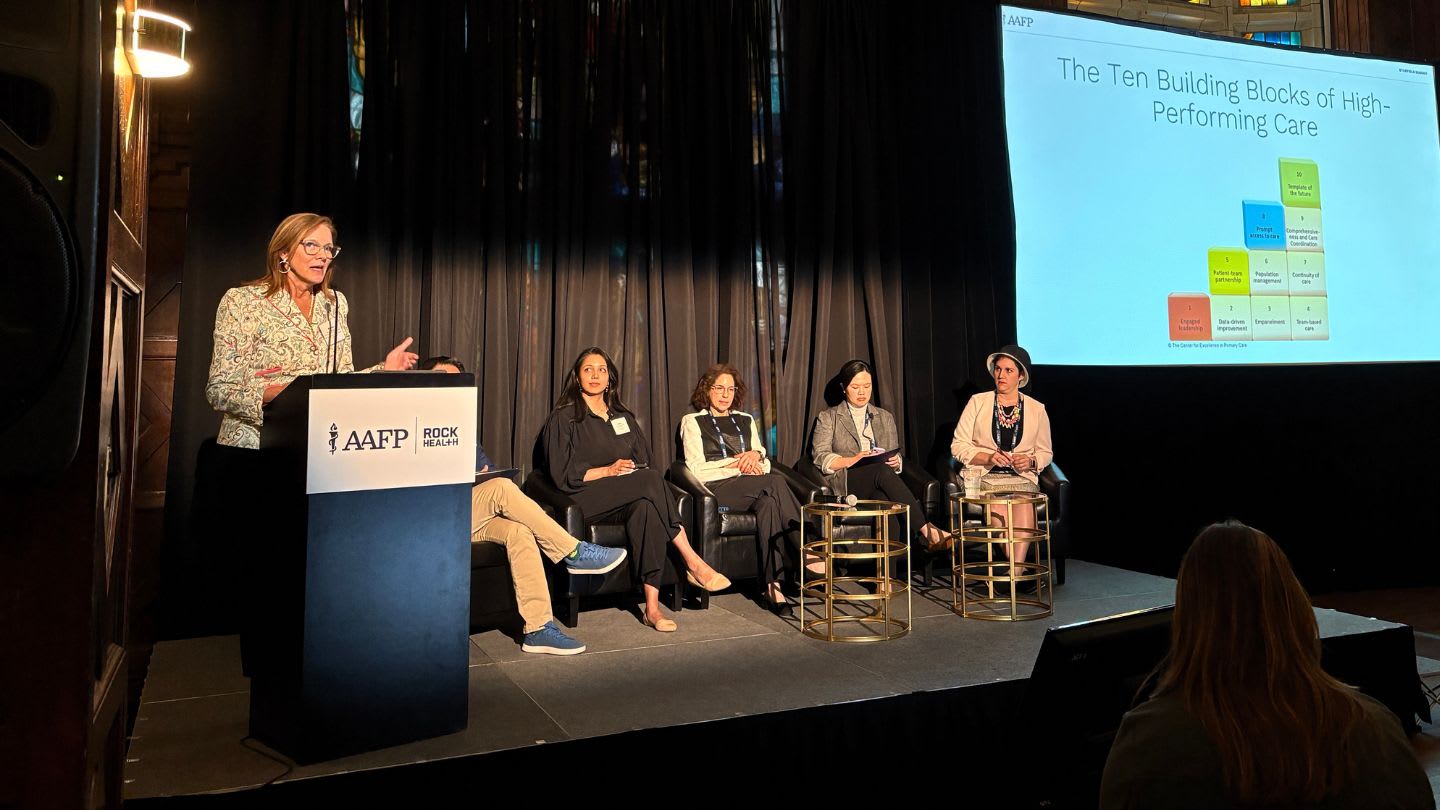
Based on these findings, the AAFP convened physicians, tech experts, EHR vendors, health system executives and more and to establish and advance a national vision and roadmap for AI in primary care. The resulting roadmap defines how AI can evolve in a way that’s grounded in the core values of the discipline to serve patients, physicians, care teams, support staff and communities.
A shared vision and roadmap for AI in primary care
Stay updated on AI: Email sign-up
New AI tools and opportunities are emerging every day, and AAFP is committed to bringing members timely, trustworthy resources that support primary care.
Sign up to receive updates on new resources, events, and opportunities to help ensure AAFP’s AI efforts are focused on what matters most to family physicians.
AI for practice support
Before consumer applications like Google’s Gemini and Microsoft’s Copilot launched, AI tech companies were already working to develop and launch tools that could help physicians reduce some of the common administrative burdens in practice. AI tools like ambient scribes are now well established in practices, and physicians often report they help reduce burnout.
Explore tools that can help you take back your time, choose the right AI vendor and avoid the pitfalls associated with AI in health care.
AI in patient care
Learn how AI is shaping patient care and about researchers’ perspectives on its use for clinical decision making.
AI CME and events
Dive into AI and digital health topics while earning CME, and find opportunities to build and collaborate in-person as programming is available.
Primary Care Innovation Network
The AAFP’s Primary Care Innovation Network (PCIN) is an initiative to accelerate physician-led innovation in AI and digital health, building on years of research and collaboration. It’s objective is to ensure family physicians remain firmly at the center of how digital health and AI tools are evaluated, developed and responsibly integrated into primary care practices.
The PCIN advisory committee brings together leaders from primary care, health systems and major technology organizations to help ensure AI tools are practical, trustworthy and aligned with the realities of clinical practice. They meet quarterly to set priorities, provide strategic guidance and ensure alignment with physician needs and AAFP policy.
Members of the Primary Care Innovation Network advisory committee include:
| Ricky Y. Choi, MD, MPH Samsung Electronics America & Stanford School of Medicine, Advisory Committee Co-Chair |
Rachel Gruner, MPH Microsoft AI |
| Kameron Matthews, MD, JD, FAAFP IMPaCT Care, Advisory Committee Co-Chair |
Paulius Mui, MD X=PrimaryCare |
| Christopher Crow, MD Catalyst Health Group |
David Rushlow, MD Mayo Clinic |
| Jason B. Dees, DO, FAAFP Molina Healthcare |
Matt Sakumoto, MD Nabla Health / UCSF Health |
| Kyna Fong, PhD Elation Health |
Rosemary Weldon, MBA Aledade, Inc. |
| Jackie Gerhart, MD Epic Systems |
Travis Zack, MD, PhD OpenEvidence |
AAFP position on AI
AI can strengthen primary care to improve human health, but only if primary care stakeholders are involved throughout the innovation lifecycle, training and support are provided, and key systems barriers are proactively addressed. Read the AAFP official policy on the ethical use of AI.