Pregnancy dating is determined by the patient's last menstrual period or an ultrasound measurement. A full-term pregnancy is considered 37 weeks' gestation or more. Spontaneous labor begins when regular painful uterine contractions result in a cervical change. Active labor begins at 6 cm dilation and is marked by more predictable, accelerated cervical change. In the absence of pregnancy complications, intermittent fetal auscultation may be considered as an alternative to continuous electronic fetal monitoring, which is associated with a high false-positive rate. Intravenous antibiotic prophylaxis is indicated in patients with group B streptococcus colonization or those at high risk to prevent newborn early-onset group B streptococcus. The likelihood of vaginal delivery is increased by providing continuous nonmedical support during labor, encouraging mobility, and using a peanut ball with epidural analgesia. Neuraxial analgesia is more effective for pain control than systemic opioids and is associated with fewer adverse effects. Delayed pushing during the second stage of labor has risks but does not affect the mode of delivery. Routine oropharyngeal suctioning of the newborn is not recommended, even with meconium-stained amniotic fluid. Delayed cord clamping reduces newborn anemia. Prevention of postpartum hemorrhage in patients at risk includes prophylactic uterotonic administration and controlled cord traction. Perineal lacerations that alter anatomy or are not hemostatic should be repaired. (Am Fam Physician. 2024;109(6):525-532. Copyright © 2024 American Academy of Family Physicians.)
Approximately 2.5 million infants were born via spontaneous vaginal delivery in the United States in 2021.1 The estimated due date of a pregnancy is 40 weeks after the first day of the patient's last menstrual period; a full-term pregnancy is considered 37 weeks' gestation or more.2 Pregnancy dating can be confirmed by an ultrasound measurement of the fetal crown-rump length early in the first trimester. Ultrasound dating should be used for irregular or unknown menstrual timing or a significant discrepancy between menstrual and ultrasound dating (Table 1).2 Accurate dating guides surveillance and management, including the timing of medically indicated delivery when needed.3
SORT: KEY RECOMMENDATIONS FOR PRACTICE
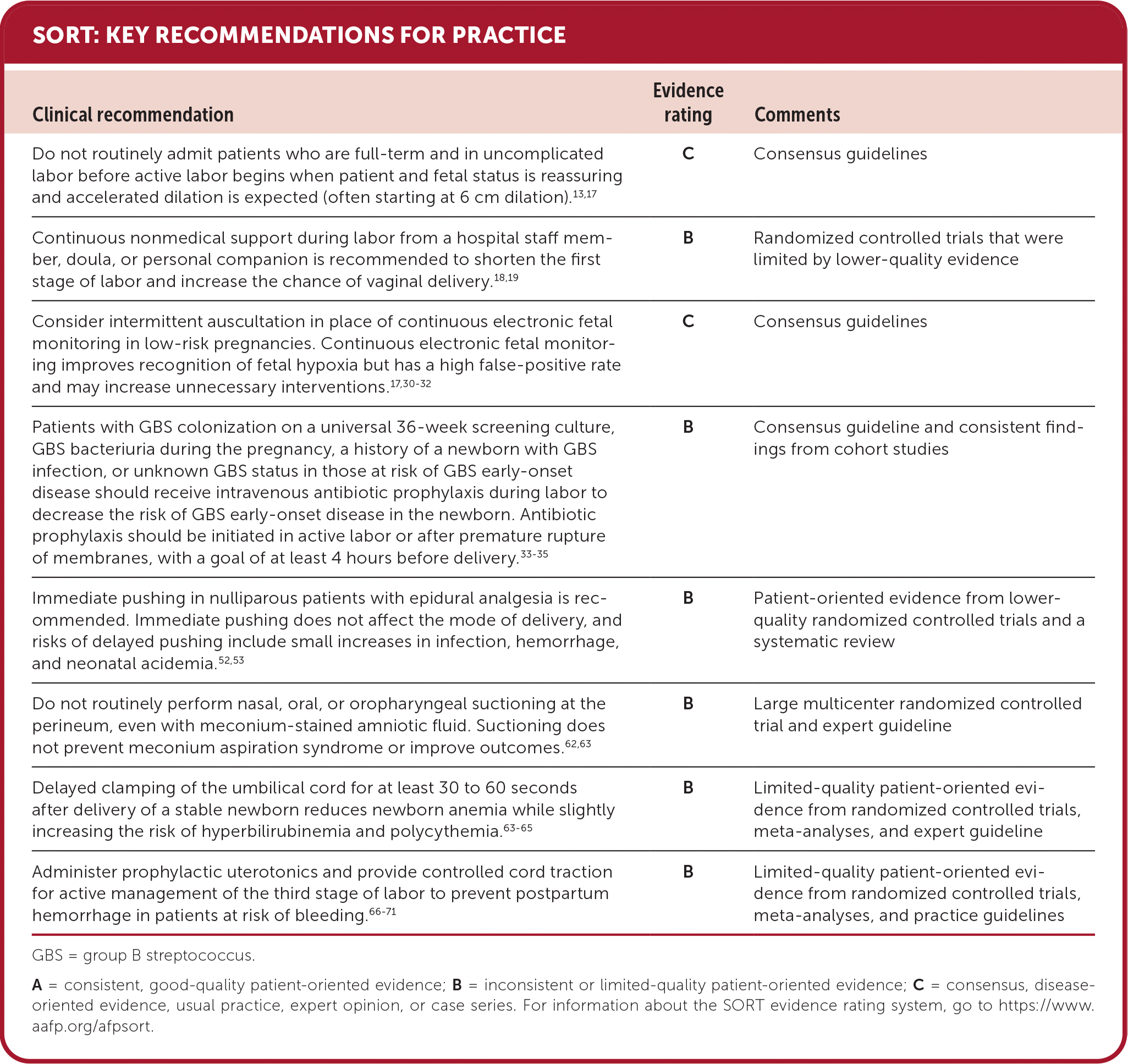
GBS = group B streptococcus.
A = consistent, good-quality patient-oriented evidence; B = inconsistent or limited-quality patient-oriented evidence; C = consensus, disease-oriented evidence, usual practice, expert opinion, or case series. For information about the SORT evidence rating system, go to https://www.aafp.org/afpsort.
Read the full article
Get immediate access, anytime, anywhere.
Choose a single article, issue, or full-access subscription.
Earn up to 14 CME credits per issue.