A 6-week-old male infant presented to urgent care with fever, congestion, and a rash of diffuse erythematous papules and patches on his palms and soles. He was treated with a 10-day course of cephalexin. The rash began peeling, and his symptoms improved. After 1 month, the rash recurred (Figure 1 and Figure 2). The infant had been born at term to a 20-year-old gravida 1, para 1 mother. The pregnancy was complicated by obesity, chronic hypertension, Trichomonas infections in the first trimester, and chlamydia at delivery.
FIGURE 1
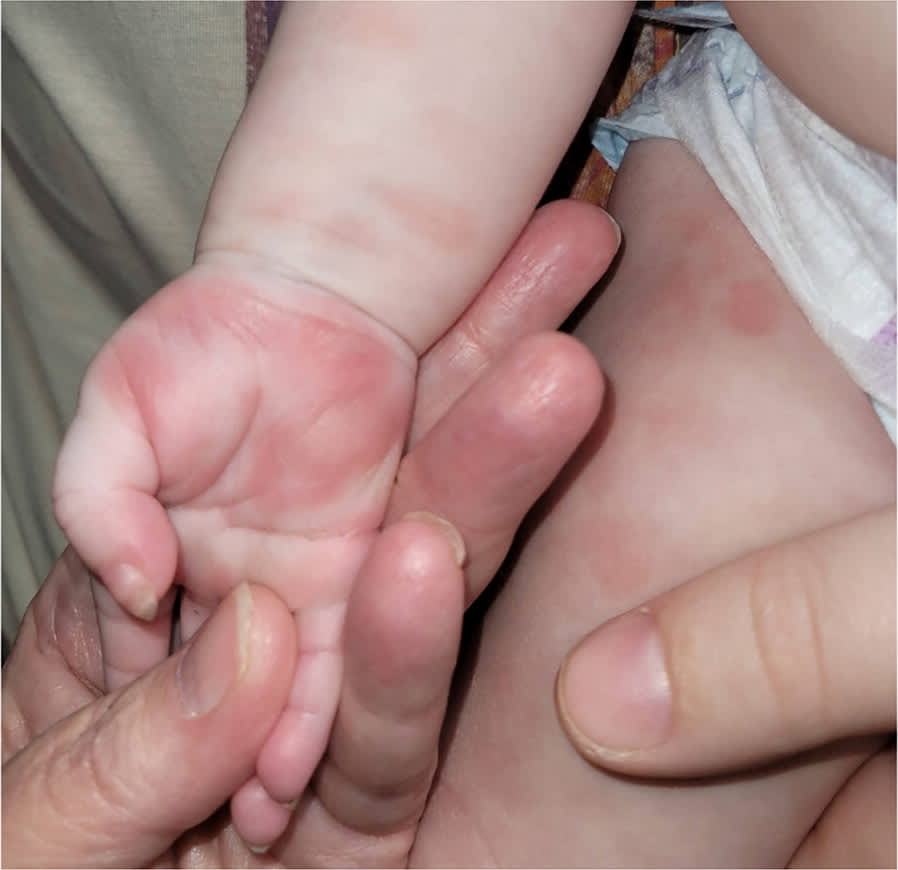
FIGURE 2
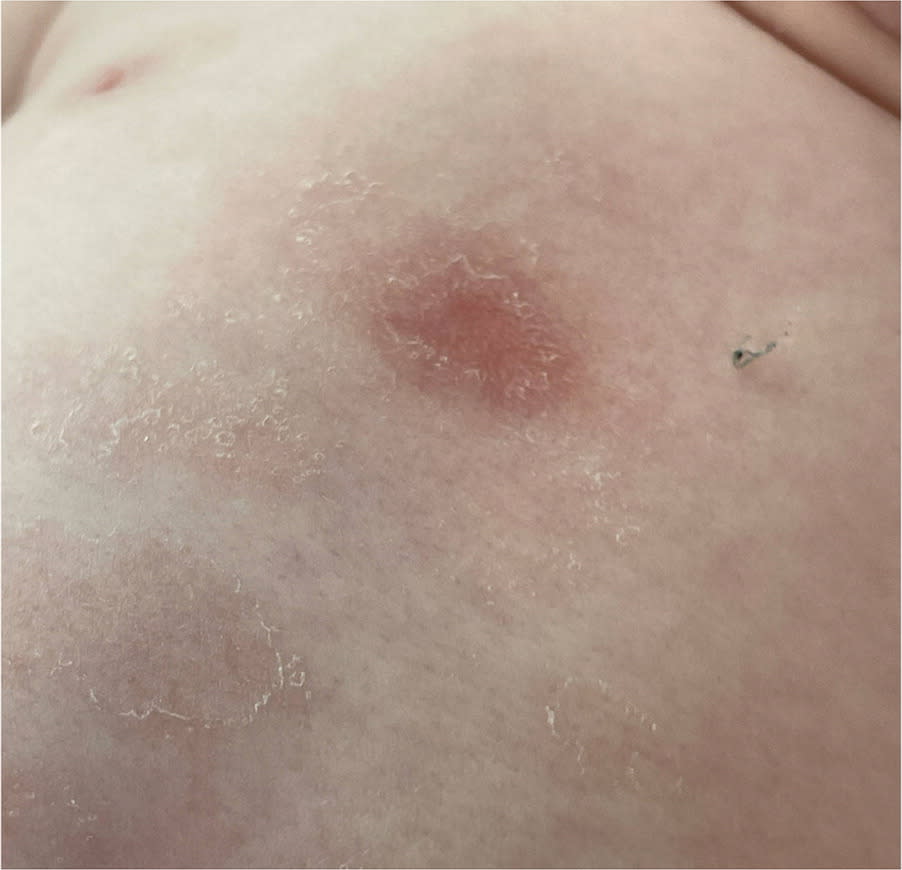
QUESTION
Based on the patient’s history and physical examination, which one of the following is the most likely diagnosis?
- A. Congenital syphilis.
- B. Coxsackievirus infection.
- C. Impetigo neonatorum.
- D. Viral exanthem.
DISCUSSION
The correct answer is A: congenital syphilis, which results from the spread of Treponema pallidum through the placenta or by contact with an untreated mother’s lesions during delivery. In affected infants, rhinitis can present during the first week of life due to mucous membrane involvement. The rash typically develops 1 to 3 weeks later as papulosquamous or red, pink, or copper-colored maculopapular lesions on the back, buttocks, posterior thighs, palms, and soles. Eventually, the rash desquamates and crusts. The presentation varies, and syphilis should be suspected in patients who are at risk. Treatment consists of 10 days of intravenous penicillin G.1
Coxsackievirus infection, also known as hand-foot-and-mouth disease, is typically seen in children younger than 7 years. It presents with low-grade fever and decreased appetite, followed by eruption of vesicular lesions, usually 2 to 6 mm in diameter, with surrounding erythema. The rash commonly occurs on the palms and soles but may be found on the buttocks, legs, and arms. Lesions rupture to form painless, superficial ulcers with a gray-yellow base. Painful oral ulcers can occur on the tongue, buccal area, and soft palate. The infection resolves spontaneously after 7 to 10 days.2
Impetigo neonatorum is caused by Staphylococcus aureus infection. It presents with reddish lesions around the mouth, nose, and perioral region. After 1 week, the lesions burst and develop a honey-colored crust. Exfoliative toxins produced by S aureus can lead to large patches of skin sloughing as in staphylococcal scalded skin syndrome.3
A viral exanthem is a widespread, uniform rash typically associated with systemic symptoms, such as fever or malaise. Exanthems are common in childhood and can be caused by a viral infection or immune response. Common viral causes include varicella, measles, rubella, roseola, and Epstein-Barr virus. Viral exanthems typically do not involve the palms or soles and are unlikely to improve after initial antibiotic treatment.4
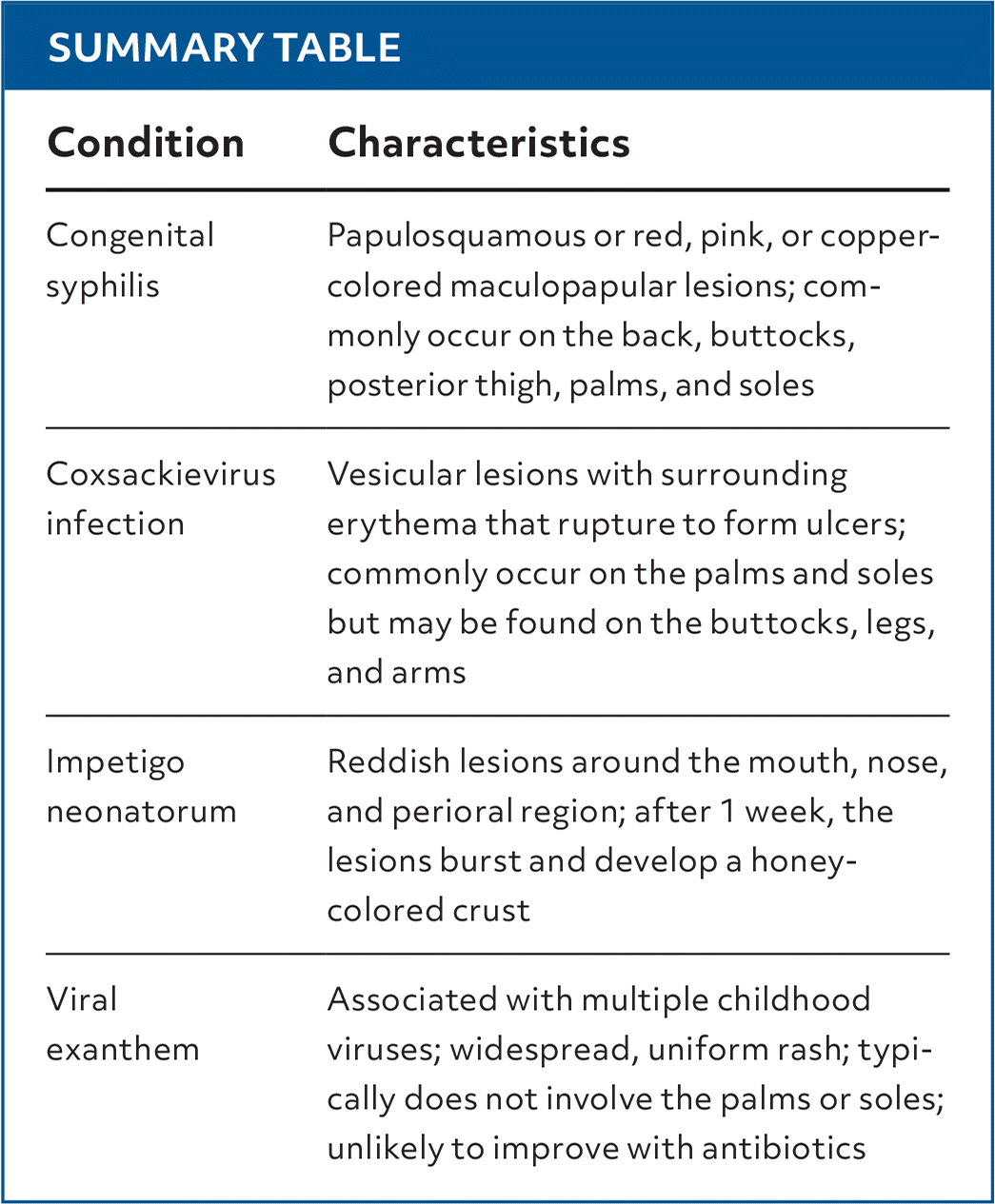
SUMMARY TABLE
| Condition | Characteristics |
|---|---|
| Congenital syphilis | Papulosquamous or red, pink, or copper-colored maculopapular lesions; commonly occur on the back, buttocks, posterior thigh, palms, and soles |
| Coxsackievirus infection | Vesicular lesions with surrounding erythema that rupture to form ulcers; commonly occur on the palms and soles but may be found on the buttocks, legs, and arms |
| Impetigo neonatorum | Reddish lesions around the mouth, nose, and perioral region; after 1 week, the lesions burst and develop a honey-colored crust |
| Viral exanthem | Associated with multiple childhood viruses; widespread, uniform rash; typically does not involve the palms or soles; unlikely to improve with antibiotics |
Read the full article
Get immediate access, anytime, anywhere.
Choose a single article, issue, or full-access subscription.
Earn up to 14 CME credits per issue.