DETAILS FOR THIS REVIEW
Study Population: 48,148 adults with type 2 diabetes and chronic kidney disease (CKD) from 42 trials; patients had CKD stages 1 to 5 diagnosed by Kidney Disease: Improving Global Outcomes guidelines plus at least 3 months of one of the following: moderate to severe albuminuria regardless of estimated glomerular filtration rate (eGFR), eGFR less than 90 mL/min/1.73 m2 with structural abnormalities of the kidney or urinary sediment abnormalities, or eGFR less than 60 mL/min/1.73 m2
Efficacy End Points: Reduction in all-cause death, major adverse cardiovascular events (composite outcomes), and cardiovascular death; improvement in kidney outcomes
Harm End Points: Severe hypoglycemia
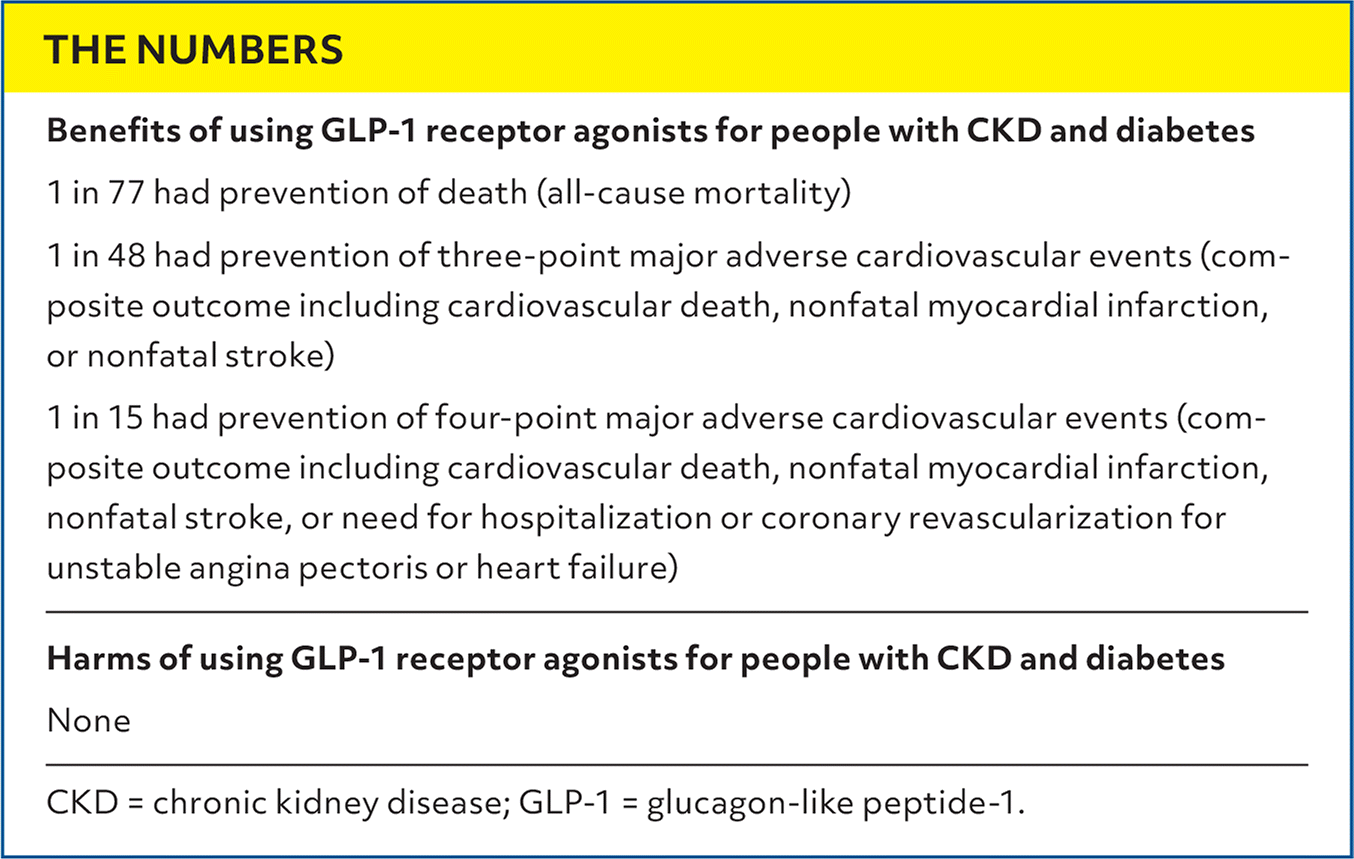
| Benefits of using GLP-1 receptor agonists for people with CKD and diabetes |
| 1 in 77 had prevention of death (all-cause mortality) |
| 1 in 48 had prevention of three-point major adverse cardiovascular events (composite outcome including cardiovascular death, nonfatal myocardial infarction, or nonfatal stroke) |
| 1 in 15 had prevention of four-point major adverse cardiovascular events (composite outcome including cardiovascular death, nonfatal myocardial infarction, nonfatal stroke, or need for hospitalization or coronary revascularization for unstable angina pectoris or heart failure) |
| Harms of using GLP-1 receptor agonists for people with CKD and diabetes |
| None |
Narrative: Diabetes increases the risk for myocardial infarction, ischemia, arrhythmia, heart failure, retinopathy, neuropathy, and end-stage kidney disease.1 Type 2 diabetes from insulin resistance accounts for 90% of diabetes cases. Incidence of type 2 diabetes continues to rise in the United States, with increasing rates of obesity and more younger patients meeting diagnostic criteria.2 It is also an increasing global health burden, with 578 million people (10.2%) estimated to meet diagnostic criteria by 2030 and 700 million (10.9%) by 2045.2
Therapy for type 2 diabetes, which should be patient-centered and individualized, historically included lifestyle changes involving diet, exercise, and use of metformin.3 However, the latest American Diabetes Association and Kidney Disease: Improving Global Outcomes guidelines now recommend glucagon-like peptide-1 (GLP-1) receptor agonists, with or without metformin, as initial pharmacotherapy for patients with type 2 diabetes who are at high risk for cardiovascular disease, heart failure, or CKD.1,4 GLP-1 agonists are incretin hormone mimetics that increase insulin synthesis while decreasing glucagon production and gastric emptying, which overall reduces food intake.
The 2025 Cochrane review discussed here evaluated the effectiveness and risks of GLP-1 agonists compared with placebo. The systematic review involved 42 multinational randomized controlled trials, including 48,148 adult patients with type 2 diabetes and concomitant CKD.5
Moderate-certainty evidence showed that GLP-1 agonists probably decreased all-cause death compared with placebo over a median 26 weeks of follow-up (risk ratio = 0.85; 95% CI, 0.74–0.98; absolute risk difference = 1.3%; number needed to treat = 77; eight studies with 17,861 patients). Moderate-certainty evidence demonstrated that GLP-1 agonists probably decreased the risk of four-point major adverse cardiovascular events (composite outcome including cardiovascular death, nonfatal myocardial infarction, nonfatal stroke, or need for hospitalization or coronary revascularization for unstable angina pectoris or heart failure) compared with placebo over a median 200 weeks of follow-up (risk ratio = 0.77; 95% CI, 0.67–0.89; absolute risk difference = 7%; number needed to treat = 15; one study with 2,158 patients). Moderate-certainty evidence also showed that GLP-1 agonists probably decreased the risk of three-point major adverse cardiovascular events (composite outcome including cardiovascular death, nonfatal myocardial infarction, or nonfatal stroke) compared with placebo over a median 137 weeks of follow-up (risk ratio = 0.84; 95% CI, 0.73–0.98; absolute risk difference = 2.1%; number needed to treat = 48; five studies with 19,825 patients).
Read the full article
Get immediate access, anytime, anywhere.
Choose a single article, issue, or full-access subscription.
Earn up to 14 CME credits per issue.