Croup is a common childhood respiratory illness with peak incidence in October and November. Inflammation of the subglottic structures results in obstruction of the upper airway, causing the characteristic barking cough, hoarseness, and inspiratory stridor. Fever may also be present. Patients with suspected croup should be assessed for more severe causes of upper airway obstruction, such as bacterial tracheitis, retropharyngeal abscess, peritonsillar abscess, foreign body obstruction, and epiglottitis. Radiography or laboratory testing is typically unnecessary for diagnosis but should be considered if the diagnosis is unclear. Corticosteroids are recommended as first-line treatment to reduce symptom burden and the need for advanced medical care. Dexamethasone is the most-studied corticosteroid, but prednisolone may also be used. A single oral dose of dexamethasone (0.6 mg/kg, maximum 12 mg) is standard. Moderate to severe croup should be treated with nebulized epinephrine and corticosteroids. Recurrent episodes of croup should prompt evaluation for an underlying anatomic abnormality or medical condition.
Croup (laryngotracheobronchitis) includes multiple upper respiratory syndromes and is classified as acute viral or recurrent.1 Characteristic symptoms include barking cough, hoarseness, and inspiratory stridor.2 This article summarizes the best available patient-oriented evidence for diagnosis and management of croup.
SORT: KEY RECOMMENDATIONS FOR PRACTICE
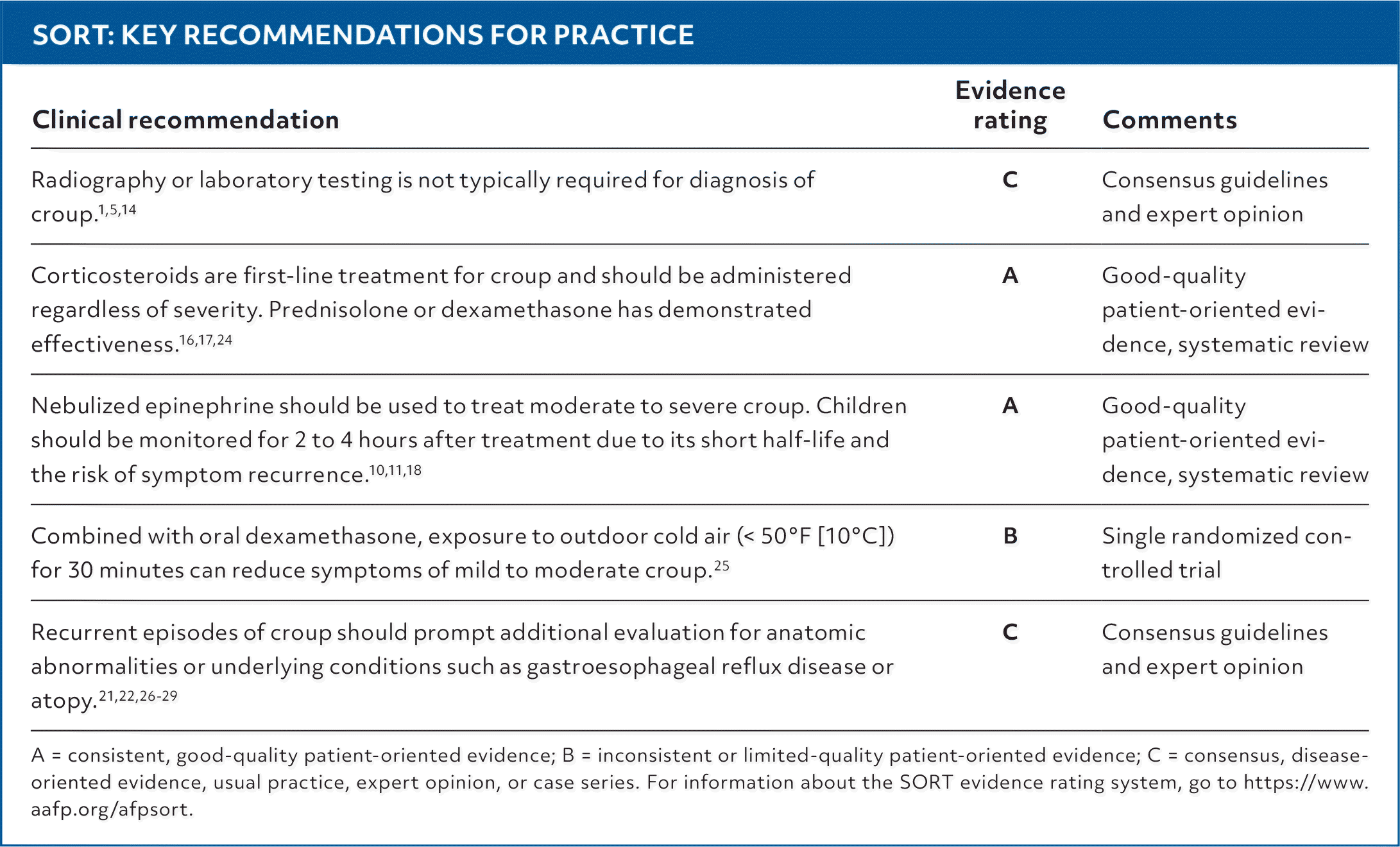
| Clinical recommendation | Evidence rating | Comments |
|---|---|---|
| Radiography or laboratory testing is not typically required for diagnosis of croup.1,5,14 | C | Consensus guidelines and expert opinion |
| Corticosteroids are first-line treatment for croup and should be administered regardless of severity. Prednisolone or dexamethasone has demonstrated effectiveness.16,17,24 | A | Good-quality patient-oriented evidence, systematic review |
| Nebulized epinephrine should be used to treat moderate to severe croup. Children should be monitored for 2 to 4 hours after treatment due to its short half-life and the risk of symptom recurrence.10,11,18 | A | Good-quality patient-oriented evidence, systematic review |
| Combined with oral dexamethasone, exposure to outdoor cold air (< 50°F [10°C]) for 30 minutes can reduce symptoms of mild to moderate croup.25 | B | Single randomized controlled trial |
| Recurrent episodes of croup should prompt additional evaluation for anatomic abnormalities or underlying conditions such as gastroesophageal reflux disease or atopy.21,22,26–29 | C | Consensus guidelines and expert opinion |
A = consistent, good-quality patient-oriented evidence; B = inconsistent or limited-quality patient-oriented evidence; C = consensus, disease-oriented evidence, usual practice, expert opinion, or case series. For information about the SORT evidence rating system, go to https://www.aafp.org/afpsort.
EPIDEMIOLOGY
- Croup is a common childhood respiratory illness with an annual incidence of approximately 352,000 cases in the United States, accounting for 1.4% of children's emergency department visits in a large epidemiologic study from 2008 to 2015.2
- Episodes of croup typically peak in October and November, with a gradual decline through late April.2,3
- Croup usually occurs between ages 6 months and 3 years, with an average age of 2.5 years.2 The male to female ratio is 2: 1.3
- The predominance in males is believed to be related to impaired antiviral immunity against respiratory infections compared with females.4
- Patients with mild illness typically can be treated as outpatients; however, 3% of those presenting to the emergency department are hospitalized.2 Up to 5% of children with croup who are discharged from the emergency department return, highlighting the importance of appropriate treatment with corticosteroids, regardless of severity, and access to outpatient follow-up.2
- Although there are nonviral causes of croup, most cases are caused by the human parainfluenza virus.3,5 The SARS-CoV-2 virus can also cause croup, with the Omicron variant associated with a more severe clinical course.6,7
- Parainfluenza and SARS-CoV-2 viruses have higher affinities for ciliated upper airway structures, leading to increased inflammation and narrowing.6,8
Read the full article
Get immediate access, anytime, anywhere.
Choose a single article, issue, or full-access subscription.
Earn up to 14 CME credits per issue.