

Bladder pain syndrome is a chronic condition characterized by bladder pain associated with other urologic symptoms. It is a diagnosis of exclusion. Initial evaluation of suspected bladder pain syndrome includes a thorough history, physical examination, urinalysis, and urine culture, with cystoscopy reserved for further assessment. Symptom diaries help clarify the diagnosis, identify common triggers for flare-ups, and guide behavioral management strategies. Treatment begins with behavior and lifestyle modification and pelvic floor physical therapy. If this is inadequate, oral medications (eg, gabapentinoids, amitriptyline, antihistamines), intravesical instillation therapies, or procedural therapies (eg, neuromodulation) can be offered. Pain should be assessed at baseline and throughout the treatment course. Optimal treatment is multimodal, individualized, and multidisciplinary, frequently involving referral to urology or urogynecology specialists.
BACKGROUND
Bladder pain syndrome, formerly known as interstitial cystitis, is a chronic condition with a 4: 1 ratio of women to men.1 In 2025, the American Urogynecologic Society and International Urogynecological Association agreed to standard terminology, including renaming the condition in women to female bladder pain syndrome.2 For simplicity and inclusion of male patients, this article refers to the condition as bladder pain syndrome and references issues specific to male patients when appropriate.
The consensus definition of bladder pain syndrome is a chronic, intermittent condition of at least 6 weeks' duration, involving pain or discomfort localized to the bladder—often with bladder filling—that is not attributed to other pathology.2,3 The pathophysiology includes several possible etiologies and phenotypes, such as urothelial dysfunction, central pelvic sensitization, and inflammatory Hunner lesions of the bladder lining (Figure 1).2–5 This article uses female and male to refer to a patient's biologic organs at birth.
SORT: KEY RECOMMENDATIONS FOR PRACTICE
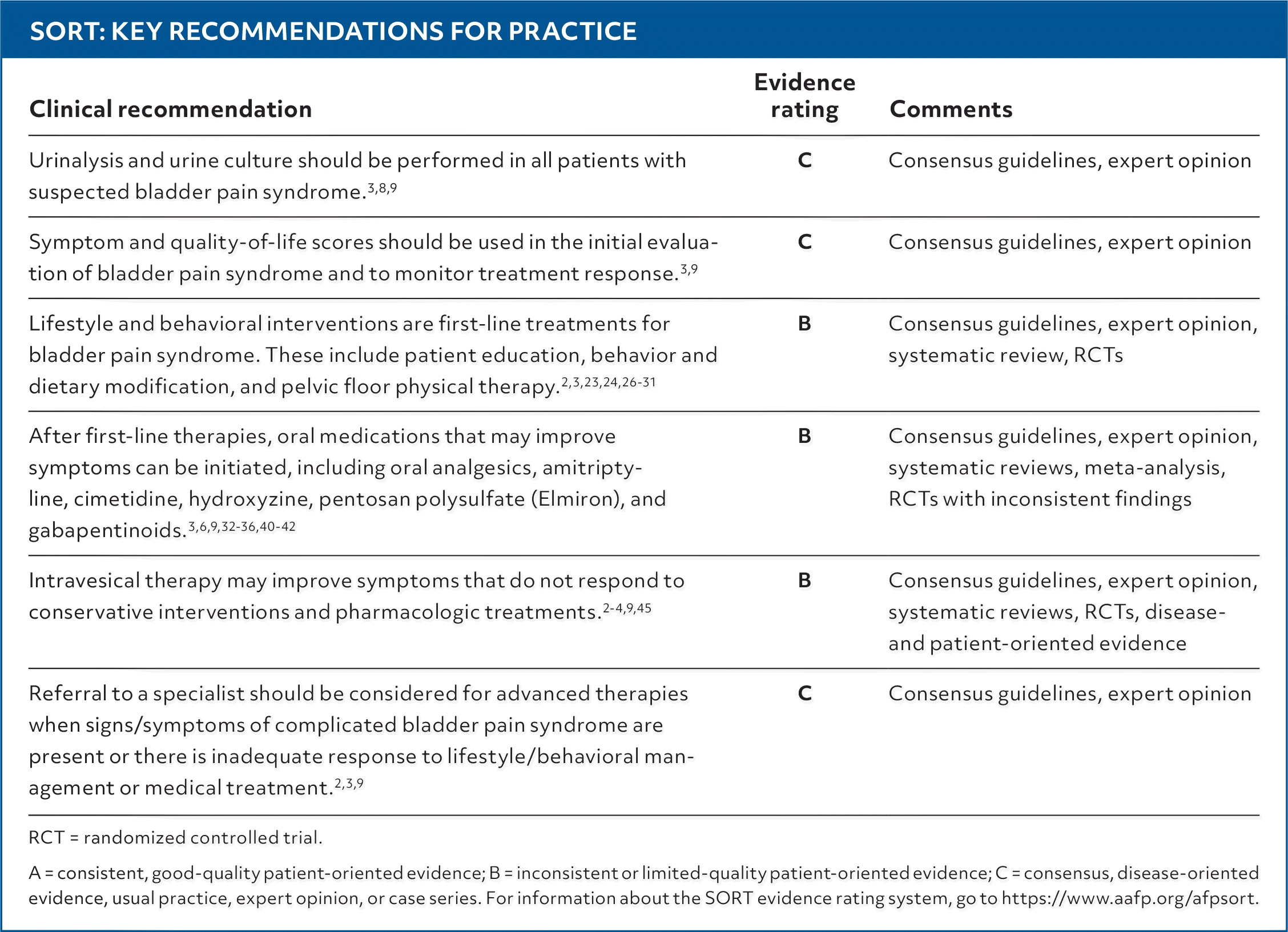
| Clinical recommendation | Evidence rating | Comments |
|---|---|---|
| Urinalysis and urine culture should be performed in all patients with suspected bladder pain syndrome.3,8,9 | C | Consensus guidelines, expert opinion |
| Symptom and quality-of-life scores should be used in the initial evaluation of bladder pain syndrome and to monitor treatment response.3,9 | C | Consensus guidelines, expert opinion |
| Lifestyle and behavioral interventions are first-line treatments for bladder pain syndrome. These include patient education, behavior and dietary modification, and pelvic floor physical therapy.2,3,23,24,26–31 | B | Consensus guidelines, expert opinion, systematic review, RCTs |
| After first-line therapies, oral medications that may improve symptoms can be initiated, including oral analgesics, amitriptyline, cimetidine, hydroxyzine, pentosan polysulfate (Elmiron), and gabapentinoids.3,6,9,32–36,40–42 | B | Consensus guidelines, expert opinion, systematic reviews, meta-analysis, RCTs with inconsistent findings |
| Intravesical therapy may improve symptoms that do not respond to conservative interventions and pharmacologic treatments.2–4,9,45 | B | Consensus guidelines, expert opinion, systematic reviews, RCTs, disease and patient-oriented evidence |
| Referral to a specialist should be considered for advanced therapies when signs/symptoms of complicated bladder pain syndrome are present or there is inadequate response to lifestyle/behavioral management or medical treatment.2,3,9 | C | Consensus guidelines, expert opinion |
RCT = randomized controlled trial.
A = consistent, good-quality patient-oriented evidence; B = inconsistent or limited-quality patient-oriented evidence; C = consensus, disease-oriented evidence, usual practice, expert opinion, or case series. For information about the SORT evidence rating system, go to https://www.aafp.org/afpsort.
Read the full article
Get immediate access, anytime, anywhere.
Choose a single article, issue, or full-access subscription.
Earn up to 14 CME credits per issue.
