Foreign body ingestions are a common reason for visits to the emergency department in the United States. The most commonly ingested objects include coins and toys, whereas button batteries and magnets are most likely to cause serious complications. Most ingestions are unwitnessed and do not cause symptoms, but choking and vomiting may occur. Diagnosis should begin with plain radiography because it is most sensitive for metallic objects. Management can include watchful waiting, esophagogastroduodenoscopy (EGD), and general or cardiothoracic surgery, depending on the type of object ingested, its location, and symptoms. Coins often pass spontaneously, but large or proximally lodged coins in young children may require EGD. Button battery ingestion is a medical emergency due to rapid tissue damage and risk of fatal vascular injury; honey or sucralfate can be used as interim treatment before emergent EGD. Magnet ingestion, especially when it involves multiple high-powered magnets, poses a severe risk of gastrointestinal injury and often necessitates emergent EGD or surgical intervention. Sharp objects may cause perforation and require close monitoring for removal with emergent or urgent EGD. Food impactions and absorptive objects also require emergent EGD because of their propensity to obstruct the esophagus. Prompt evaluation, imaging, and object-specific management are critical to prevent complications.
Foreign body ingestions are a typical reason for visits to the emergency department in the United States. In 2016, they were the fourth most common reason for calls to America's Poison Centers for children 5 years and younger,1 and 100,564 cases were reported in 2023.1 Foreign body ingestions in children younger than 5 years account for 75% of reported cases.2,3 Children often cannot describe the ingestion or its timing, and most ingestions are asymptomatic and unwitnessed.2,4–6 In a retrospective cohort study, the most common symptoms were choking and gagging, followed by vomiting, dysphagia, odynophagia, cough, and drooling.4 Physical examination results were most often normal; in the review, only 6% of patients exhibited tenderness to palpation of their abdomen, chest, or throat.4
SORT: KEY RECOMMENDATIONS FOR PRACTICE
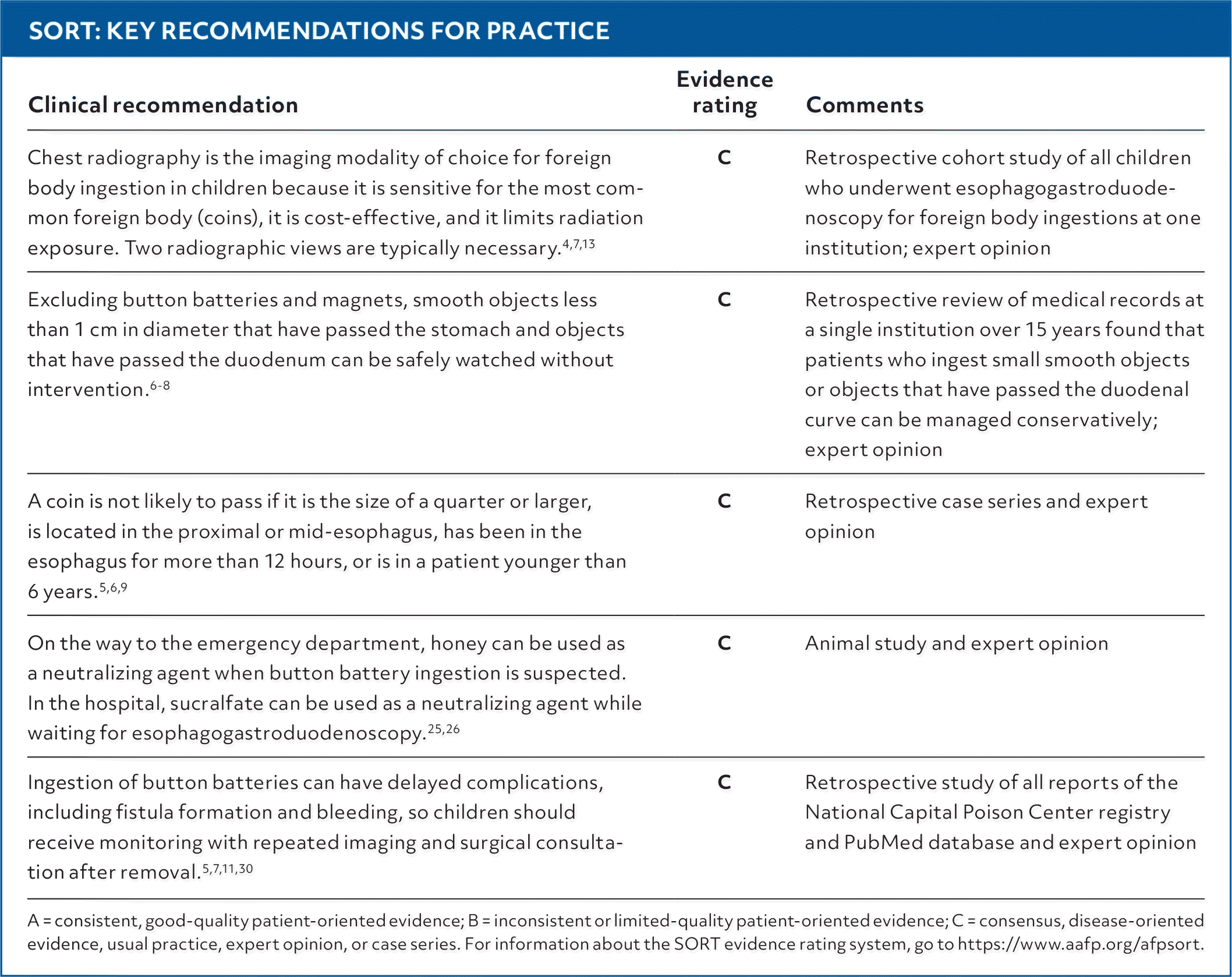
| Clinical recommendation | Evidence rating | Comments |
|---|---|---|
| Chest radiography is the imaging modality of choice for foreign body ingestion in children because it is sensitive for the most common foreign body (coins), it is cost-effective, and it limits radiation exposure. Two radiographic views are typically necessary.4,7,13 | C | Retrospective cohort study of all children who underwent esophagogastroduodenoscopy for foreign body ingestions at one institution; expert opinion |
| Excluding button batteries and magnets, smooth objects less than 1 cm in diameter that have passed the stomach and objects that have passed the duodenum can be safely watched without intervention.6–8 | C | Retrospective review of medical records at a single institution over 15 years found that patients who ingest small smooth objects or objects that have passed the duodenal curve can be managed conservatively; expert opinion |
| A coin is not likely to pass if it is the size of a quarter or larger, is located in the proximal or mid-esophagus, has been in the esophagus for more than 12 hours, or is in a patient younger than 6 years.5,6,9 | C | Retrospective case series and expert opinion |
| On the way to the emergency department, honey can be used as a neutralizing agent when button battery ingestion is suspected. In the hospital, sucralfate can be used as a neutralizing agent while waiting for esophagogastroduodenoscopy.25,26 | C | Animal study and expert opinion |
| Ingestion of button batteries can have delayed complications, including fistula formation and bleeding, so children should receive monitoring with repeated imaging and surgical consultation after removal.5,7,11,30 | C | Retrospective study of all reports of the National Capital Poison Center registry and PubMed database and expert opinion |
A = consistent, good-quality patient-oriented evidence; B = inconsistent or limited-quality patient-oriented evidence; C = consensus, disease-oriented evidence, usual practice, expert opinion, or case series. For information about the SORT evidence rating system, go to https://www.aafp.org/afpsort.
Read the full article
Get immediate access, anytime, anywhere.
Choose a single article, issue, or full-access subscription.
Earn up to 14 CME credits per issue.