
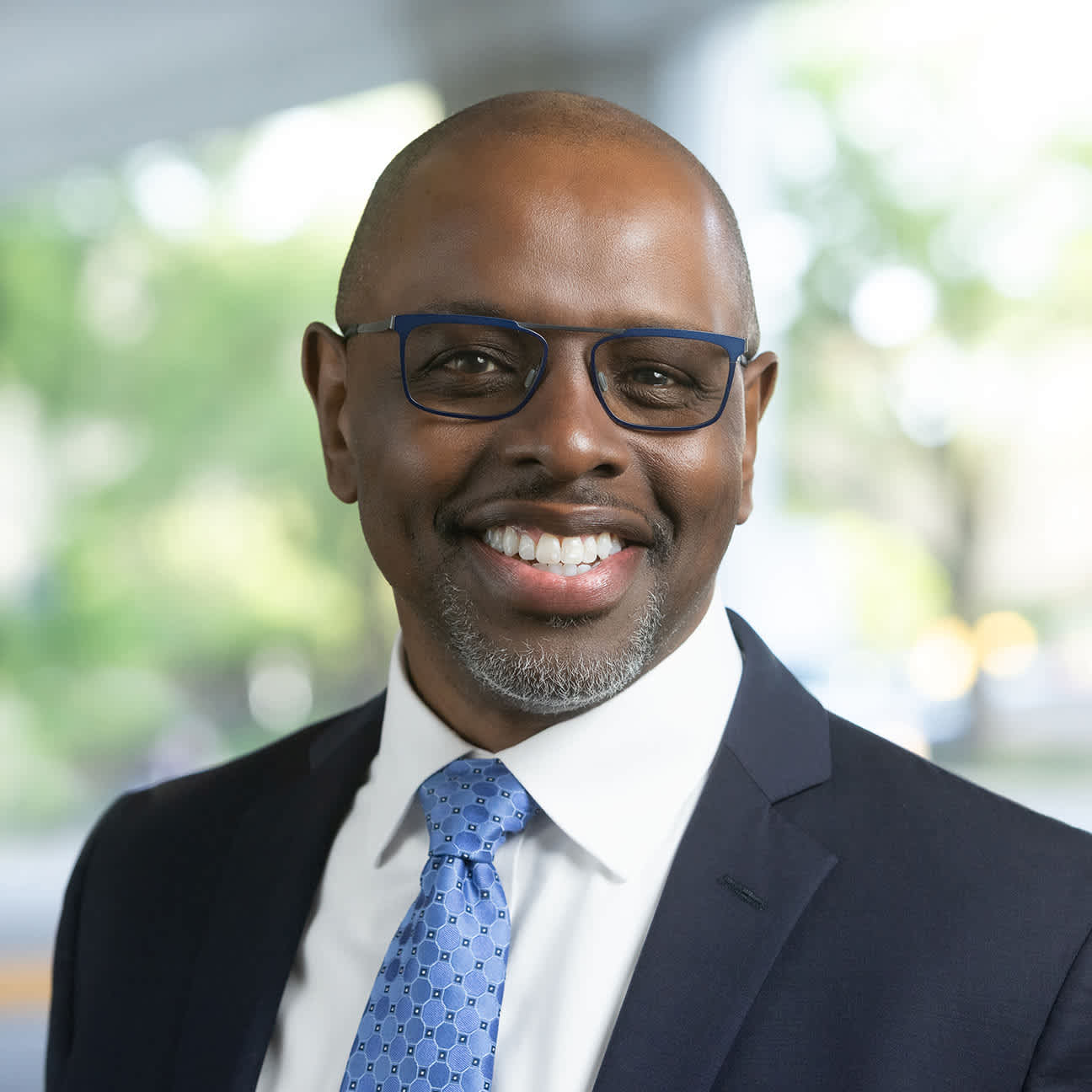
Cedric T. Barnes, DO, FAAFP
Candidate for director
Personal statement
Family medicine has shaped every part of my professional life. For more than three decades, I have practiced comprehensive family medicine while navigating the realities of practice sustainability, administrative burden, workforce shortages and persistent health inequities, always striving to maintain joy, purpose and meaning in my work. These lived experiences have grounded my leadership and fueled my long-standing commitment to advocacy within the American Academy of Family Physicians.
As a private practice physician and practice president, I understand firsthand the challenges a physician-led practices face: negotiating with payers, supporting and retaining staff, and adapting through diversification of payment models and care delivery methods. These responsibilities have given me a practical, frontline perspective on what family physicians need to remain viable and fulfilled in today's health care environment.
My service at the state and national levels, including leadership roles within the Delaware Academy of Family Physicians, the Medical Society of Delaware and the First State Chapter of the National Medical Association, has reinforced the critical importance of strong governance and physician representation. This work has strengthened my resolve to advocate for policies and systems that improve outcomes for patients while also supporting and sustaining family physicians across diverse practice settings.
Within the American Academy of Family Physicians, my service on the Commission on Membership and Member Services and as chair of the Member Constituency Task Force has affirmed my belief that the Academy's greatest strength is its members. Listening to physicians, understanding their concerns and helping build the connections needed to drive meaningful solutions has been central to my work. Supporting the health and well-being of our colleagues strengthens the care we provide for our patients and communities.
I am seeking a seat on the AAFP Board of Directors because I believe the Academy must continue to lead with boldness and inclusivity as it addresses workforce challenges, payment reform, administrative burden and member engagement. I bring a collaborative leadership style, a deep respect for governance, and a strong connection to frontline family physicians. Most importantly, I bring an unwavering commitment to the mission of family medicine and to ensuring that the AAFP remains a trusted, forward-thinking voice for our specialty for now and for generations to come.
Cedric Barnes, DO, FAAFP, is a board-certified family physician with more than 30 years of experience in comprehensive family medicine and physician leadership. He has practiced comprehensive family medicine while navigating the realities of practice sustainability, administrative burden and persistent health inequities. These lived experiences continue to fuel his long-standing commitment to family medicine.
Dr. Barnes is the founder, managing partner and president of Southern Delaware Medical Group, PA, where he provides full-spectrum family medicine from newborn through geriatrics, including women's health, minor procedures and hospice care. As a long-standing private practice physician, he brings direct, frontline experience navigating payer negotiations, workforce challenges, administrative burden, quality improvement and evolving value-based delivery care models.
His service spans local, state and national leadership. Within the American Academy of Family Physicians, Dr. Barnes has served as chair of the Commission on Membership and Member Services, chair of the AAFP Member Constituency Task Force (2025), and delegate to the Congress of Delegates. He has served on multiple reference committees, Rules Committee and Tellers Committee all at Congress of Delegate. As a Delaware delegate to the Congress of Delegates and a BIPOC delegate for the National Conference of Constituency Leaders, he advances advocacy efforts and addresses health inequities on behalf of family physicians, our communities and the patients we serve. His work centers on strengthening member engagement, elevating physician voices and ensuring the AAFP remains responsive to the evolving needs of its diverse membership.
At the state and community levels, Dr. Barnes has served as president of the Delaware Academy of Family Physicians, chair of its Advocacy Committee, chair of the Medical Society of Delaware's Diversity, Equity & Inclusion Committee, and a member of Medical Society of Delaware's Executive Board. He is also treasurer and former president of the First State Chapter of the National Medical Association, reflecting his sustained commitment to inclusive leadership and health equity.
As a leader within the medical community, he has held multiple senior medical director roles across hospice, post-acute care and long-term care, further strengthening his understanding of health care delivery across the continuum of care.
Dr. Barnes seeks election to the AAFP Board of Directors with a clear purpose: to help guide the Academy with boldness, inclusivity and strategic vision as it confronts workforce shortages, payment reform, administrative burden and member well-being. He brings a collaborative leadership style, deep respect for governance and an unwavering commitment to ensuring that family medicine not only survives but thrives for generations to come.
Members of the AAFP Congress of Delegates,
“The ultimate measure of a person is not where they stand in moments of comfort and convenience, but where they stand at times of challenge and controversy.” — Dr. Martin Luther King Jr.
My name is Cedric Barnes, and those words have guided me throughout my career as a family physician and now in my decision to run for the AAFP Board of Directors.
Family physicians are the heart of our communities. Every day, we listen intently, advocate courageously and care for the whole person. In a rapidly changing health care landscape, our patients and physicians need leaders who are forward-thinking, collaborative and grounded in compassionate, evidence-based care.
Those who know me know my smile reflects optimism, approachability and the belief that even in difficult moments, we can move forward together. Behind that smile is strength, conviction and a steadfast commitment to stand firmly for family physicians and the patients we serve.
If elected, I will work to advance innovative solutions for the future of family medicine, strengthen physician well-being, and foster meaningful collaboration across health care and communities.
I ask for your vote and the opportunity to serve with integrity, humility and purpose.
I look forward to seeing you in Nashville.
Cedric Barnes, DO, FAAFP

Listening with Purpose. Leading with Vision.
Explain how your experiences as a family physician would inform your work on behalf of members as a member of the Board?
Throughout my life, my experiences have shaped who I am as a family physician and as a leader. Every patient encounter, leadership opportunity, challenge and success has prepared me to serve on behalf of AAFP members.
At the start of my career, as the only African American family physician in a rural Georgia community, I learned that trust is earned through compassion, consistency and competence. I built relationships with patients who may not have initially accepted me as a person but came to trust me as their physician. That experience taught me to listen first, build bridges and lead with humility while never compromising my values. Those lessons would guide every decision I make as a Board member of the American Academy of Family Physicians.
My work has extended far beyond the exam room. Building a private practice, caring for patients in the office, hospital and nursing home, serving on a Medicaid Pharmacy and Therapeutics Committee, leading youth, participating in church and community initiatives, and serving in organized medicine have given me a broad understanding of the challenges facing family physicians. I have experienced the realities of independent practice, administrative burdens, workforce shortages, reimbursement challenges, physician burnout and the daily responsibility of advocating for patients. These experiences will help me respond to challenges that I am faced with while serving on the Board.
Leadership has also taught me that titles do not define influence. When a Cub Scout den leader unexpectedly walked away, the other parents looked to me to lead. Whether mentoring young swimmers, chairing committees or serving in state and national leadership roles, I have learned that leadership is about stepping forward, empowering others and helping people succeed together. Those experiences have reinforced my belief that every member deserves to feel heard, valued and represented.
My family has also shaped my leadership. My wife has taught me the importance of encouraging growth with grace, while my children continually remind me that progress comes from being open to new perspectives. They have made me a better listener, a better physician and a better leader.
As I considered whether this was the right time to seek a position on the AAFP Board of Directors, I asked myself whether my experiences had prepared me for this responsibility. My answer became clear when I was asked to resign from a board because my advocacy was considered “too loud”—too loud for family physicians, too loud for primary care and too loud for the health of my patients and communities. In that moment, I realized my voice was not too loud. Me, my voice, was ready!
As an AAFP Board member, I will bring that voice to advocate thoughtfully, listen intentionally and lead courageously. I will remain committed to listening with purpose. Leading with vision. Most importantly, I will work every day to ensure that every member knows their experiences matter and their voice helps shape the future of family medicine.
What unique skills and/or experiences do you have that would be valuable to the AAFP membership if you were elected, and why or how would those skills and/or experiences apply to your new role?
I believe that my unique skills and individuality are my “superpowers.” For me, my superpowers are listening with purpose, leading with approachability and building collaborations where others see division. Listening with purpose means more than hearing words; it means understanding the lived experiences behind them. It is how I learn what members truly need, not just as physicians, but as people practicing in very different environments across this country. I may not always be the person who has every answer, but I am often the person who can bring the right people together, create trust among differing perspectives and help a group move toward a shared goal.
That skill has shaped how I lead teams, committees and organizations. Whether in clinical practice, community work or organized medicine, I have learned that the best outcomes happen when people feel safe enough to speak honestly and when their perspectives are respected even when there is disagreement. I strive to create that kind of environment in every leadership space I enter.
Another strength I bring is the ability to connect people and resources in a way that moves ideas into action. In practice and in leadership roles, I have often served as a bridge between physicians and systems, between differing opinions, and between vision and execution. I understand that meaningful change does not come from one voice alone, but from aligned voices working toward a common purpose.
My experience as a practicing family physician in both rural and diverse community settings has also taught me how different the needs of members can be depending on geography, practice type and patient population. That perspective helps me avoid one-size-fits-all thinking and instead advocate for solutions that are flexible, inclusive and realistic for the full spectrum of family physicians.
If elected to the AAFP Board, I would apply these skills by ensuring members’ voices are not only heard but truly integrated into decision-making. I would focus on strengthening trust between leadership and membership, improving collaboration across constituencies and helping translate member concerns into meaningful action at the national level.
At my core, I am an approachable leader who believes people do their best work when they feel seen, heard and valued. My goal is not just to represent members, but to help connect them to each other and to the resources, advocacy and leadership that allow them to thrive.
Promoting the value of AAFP membership is an important leadership responsibility. If you were speaking to non-members, what are the top three things the AAFP has done or is doing well that you would highlight, and why?
When I speak with family physicians who are not AAFP members, I tell them that membership is more than a professional affiliation. It is an investment in the future of our specialty and our patients. Three areas demonstrate that value every day.
First, the AAFP gives family physicians a powerful voice through advocacy. The Advocacy Ambassador Program has transformed how members engage with legislators at both the federal and state levels. It equips physicians with timely updates, advocacy tools and opportunities to speak out on issues affecting our patients, practices and communities. The Advocacy Ambassador team is always willing to assist you in your state legislative efforts, further building that relationship between the Academy and state chapters. Members are encouraged to identify emerging concerns and help shape advocacy priorities. Whether you practice in a rural town or a large city, AAFP ensures your voice can help influence policy where it matters most.
Second, the AAFP recognizes that physician well-being is a system issue, not an individual weakness. Burnout cannot be solved by asking physicians to simply become more resilient. It requires changing the culture and systems that contribute to it. Through initiatives such as Physician Health First and Leading Physician Well-Being, the AAFP is preparing leaders to address the root causes of burnout and create healthier practice environments. This commitment benefits practicing physicians today while helping build a better future for residents, students and the next generation of family physicians. It also recognizes that solutions must be culturally responsive, ethical and inclusive for all physicians.
Third, the AAFP continues to elevate the value of family medicine. The Academy is a national voice reminding policymakers, health systems and the public that strong primary care saves lives, improves health outcomes, lowers costs and strengthens communities. Family physicians are uniquely positioned to care for patients across every stage of life, and the AAFP consistently advocates for policies that place primary care at the center of healthcare transformation. That work not only strengthens our specialty but also improves the health of the communities we serve.
The common thread in each of these efforts is that AAFP is not simply responding to today's challenges, it is shaping the future of family medicine. That is why I continue to invest my time, my leadership and my voice in the Academy, and why I encourage every family physician to become part of that work.
How would you use your leadership position to address the political divide that is currently happening within our country and in some respects within our community of family physicians? Can you offer an example of a time when you were able to build a consensus or reach a compromise on a contentious issue?
Political division often begins when we focus on our differences instead of our shared purpose. As family physicians, we come from diverse backgrounds, practice settings and political perspectives. Healthy organizations do not require unanimous agreement; they require mutual respect. We are united by our commitment to our patients, our communities and the future of family medicine. As a member of the AAFP Board, my responsibility would not be to eliminate disagreement but to create an environment where every voice is heard, respected and considered.
I have learned that consensus is built through listening, transparency and trust. People are far more willing to work together when they believe their perspectives have genuinely been heard, even if the final decision is not exactly what they hoped for. Leadership is about guiding people toward a common goal, not insisting that everyone thinks the same way.
One of the best examples of this was my experience chairing the AAFP Member Constituency Task Force. The Board charged our group with evaluating the role and future of Member Constituencies, a topic that generated passionate opinions and, at times, differing visions for the Academy. Rather than beginning with proposed solutions, we began by listening. We met with every member constituency, held listening sessions, encouraged honest dialogue and created space for people to share not only their concerns but also their hopes for the future.
While not everyone agreed on every recommendation, we continually brought the conversation back to our shared mission: ensuring every family physician feel represented, valued and engaged within the Academy. By focusing on common goals rather than individual positions, we were able to develop recommendations that reflected broad input and ultimately resulted in the adoption of a new member constituency definition by the AAFP Board.
That experience reinforced an important lesson: Meaningful progress rarely comes from persuading people to abandon their beliefs. It comes from helping people recognize that, despite different perspectives, they often share the same destination.
As an AAFP Board member, I would lead by listening with purpose, communicating with transparency and keeping our focus on what unites us: strengthening family medicine, supporting our members and improving the health of the patients and communities we serve.
The success of the AAFP five years from now will be determined by our ability to do—what?
The success of the AAFP five years from now will depend on our ability to move from being reactive to being proactive in shaping the future of health care. Too often, physicians have been placed in a position where decisions about how we practice medicine are made for us rather than with us. Others have determined the systems, policies and administrative structures that increase burden and pull us away from what we do best: caring for patients. I once heard “Nothing about us without us,” which to me means be at the table and not on the menu, and make no decisions about us, without us.
To remain strong, the AAFP must lead with vision. That means anticipating change rather than responding to it after the fact. Medicine is evolving rapidly through new technology, artificial intelligence, shifting payment models, workforce shortages and increasing demands on primary care. We cannot afford to simply adapt to these changes; we must help define them. Whether it is legislation, payer policy, or emerging technology, our success depends on ensuring that policies are shaped with physicians, patients and communities at the table where decisions are made.
Equally important, we must use innovation intentionally and responsibly. Tools such as artificial intelligence and digital health platforms have the potential to reduce administrative burden and improve care, but only if they are designed and implemented in ways that are ethical, transparent and free from bias. The AAFP has an opportunity to help lead that conversation so that technology serves physicians and patients.
Finally, success will depend on our ability to strengthen health equity and ensure that all communities have access to high-quality, patient-centered primary care. Family medicine is uniquely positioned to close gaps in care, but only if we are intentional in how we advocate, train and support physicians across diverse practice settings.
In five years, the AAFP will be successful if it has not only responded to change, but also helped lead it by reducing unnecessary burden, elevating the voice of family physicians, advancing equity and ensuring that the future of health care is shaped by those who care for patients every day.
That is what it means to lead with vision.