
Family physicians can help shape the future of AI in primary care

Too often, primary care physicians have been given tools developed without their input, ending in less than desirable results.
That’s why Paulius Mui, MD, is urging his fellow family physicians to be involved in the creation and evaluation of artificial intelligence tools and inviting the to join him Oct. 20 at the AAFP’s FMX AI Hackathon in Nashville, Tennessee. The free event is limited to 100 FMX attendees. Cash prizes will be awarded to the top three projects developed during the half-day event.
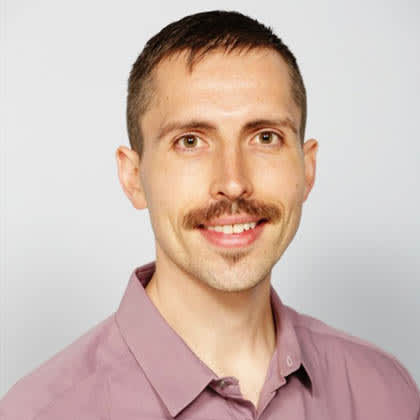
Mui, who practices in Cambridge, Massachusetts, is the CEO and co-founder of Distillemr, an AI-powered quality assurance platform designed to streamline the clinical chart review process. He also serves on an advisory committee for the AAFP’s Primary Care Innovation Network. He recently spoke with the AAFP about AI, the Hackathon and more.
Relative to AI, what’s the lesson to be learned from the development of electronic health records?
Mui: Traditionally technology has been handed to physicians, like the medical record software, and that has left a bad taste for us. The people utilizing this tech often are not the buyers of the tech. That’s been a problem in health care forever. That’s where the Hackathon comes in. We’re trying to change the status quo and give people a venue to dip their toes in.
How do you harness that and do it in a focused way that could improve our own profession? That gets me excited. The future of primary care should be shaped by the people who practice it. That’s what it’s going to take for us to have joy in our work and better patient outcomes.
What new AI tools are still needed in primary care?
Mui: Tools should be focused on the needs of the people on the ground. There’s not enough representation from people working in primary care. We need people who are on the front lines.
There’s no experience needed for the Hackathon. Did you already know how to code when you started using AI for your own practice?
Mui: I wasn’t an engineer, but I had been working alongside engineers for a few years. I built out an innovation department for urgent care and primary care centers in Texas. I hired engineers and worked with clinical and tech teams to build a new product. We built our own EMR on top of an existing one.
What AI tools have you built?
Mui: I run an AI company called Distillemr, which is a clinical quality company. We help medical groups with compliance and regulation. There are a lot of low-value tasks that clinicians do, such as chart reviews, and we help make them more efficient. We plug into medical records, review notes and provide personalized feedback to improve the care clinicians provide. I think of it as a clinical coach. We have guidance during our medical training from our preceptors and attendings. As soon as we finish residency, we’re on our own. People have anxiety about whether they are doing the right thing.
Athletes at top of their game have not just one coach but multiple coaches. Why would someone trying to improve not have a coach, especially in health care where the stakes are higher than in sports? We work with primary care groups, urgent care centers, FQHCs and digital health companies.
Besides regulatory incentives for quality improvement, some organizations need to scale on a foundation of clinical excellence while others simply want to save on cost for administrative tasks that need to be done by clinicians—that’s where we can help.
How can other family physicians get involved with AI ventures?
Mui: Be curious. Ask questions. Find other people like you who want to learn. Find your tribe. I started by writing a blog. It was like putting out a bat signal to connect with like-minded people. My blog developed into a community where we exchange ideas about ways to improve primary care.
Every city has tech events related to health care. Go to conferences and see who is speaking. The AAFP has a tech member interest group.
What did you learn about the health system as you experimented with AI?
Mui: It’s really hard to know what good care looks like. It’s highly local, personal and individualized. Health care is less about tech or business than we make it to be. The things that matter are simple things like human connection. That gets forgotten in these conversations. Is AI truly changing how patients are being seen or heard? At the end of day, it’s about the patient and the doctor, and people are trying to wedge into that space with their “brilliant” solutions. We need physicians to hold the mic and share what’s possible.
Tech companies say, “We have a solution. Where can it fit?” They’re solving their own unique problems that might reflect a small sliver of what plagues ordinary people. When physicians are involved in being experts and sharing what’s painful in their day-to-day experience, that’s where we should put our resources and energy because that will drive the right kind of conversations and developments
Why would you encourage other physicians to problem solve by building with AI?
Mui: Shape your future or someone else will do it for you.
What were your first experiences with AI as a physician?
Mui: I was a resident when ChatGPT came out. I remember thinking it was fascinating. It seemed better than Google. We had less trust in AI then because it didn’t work as well as it does now. I had to double-check my answers because there was no way to know if what it said was true. Now there are mechanisms to evaluate the technology. The more you use it, the more familiar you get with its capabilities. You learn its blind spots. I use a lot of the different products to see what the differences are.
The concept of AI morbidity and mortality reporting is something that should be implemented widely. There’s no scalable mechanism to learn from AI mistakes. The companies are not encouraged to disclose failings because it’s bad for business to be that transparent.
But we do this in health care. We have morbidity and mortality rounds to dissect things that happen when harm is caused. We don’t have those mechanisms for AI in primary care. Most organizations aren’t sophisticated enough to implement that yet because they are still working through governance policies internally.
What was your initial reaction when AI and AI vendors started to emerge in the health care space? Has your position changed?
Mui: People are putting AI on anything. There’s a funny meme about AI being like glitter—because you can’t get glitter out of anything. AI is a transformative technology, but in some big corporations, it’s just marketing. What’s in the headlines and what’s on the ground can be very different. When people advertise that they are doing something transformative in AI or are an AI-first company, often they are doing the same thing they already were doing and calling it AI. They may have added a step or two, but it’s not transformative.
AI greases the wheels of operations. If you have a bad process and digitize it, you’re just going to get a bad digital process. That’s what most people are doing. They’re making the bad parts of health care go faster.
I use AI scribes for writing my notes. It makes me use the keyboard less. It’s nice technology. In many ways we had that ability pre-AI because you could use dictation.
What should family physicians know about the AAFP’s Primary Care Innovation Network.
Mui: It’s an incredible network of individuals who are movers and shakers in their respective slices of health care. We come together to support AAFP in development of engaging initiatives at the intersection of technology and primary care. We’re just getting started.