

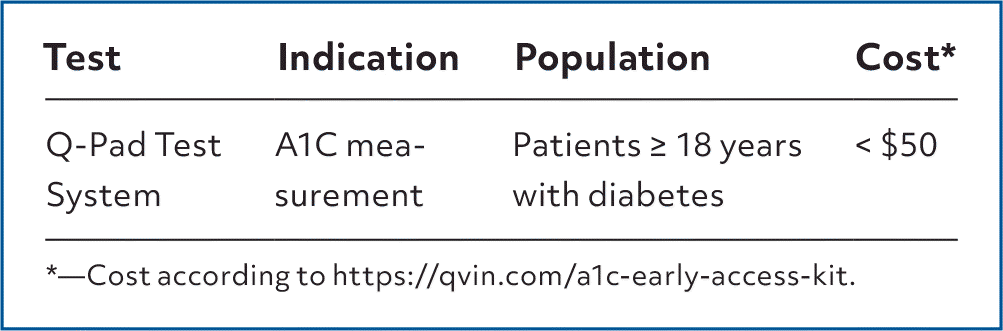
| Test | Indication | Population | Cost* |
|---|---|---|---|
| Q-Pad Test System | A1C measurement | Patients ≥ 18 years with diabetes | < $50 |
*—Cost according to https://qvin.com/a1c-early-access-kit.
The Q-Pad Test System by Qvin measures A1C using menstrual blood. It is promoted as an alternative to conventional venous blood testing in patients 18 years and older with diabetes.1 The Q-Pad Test is made up of a pad and A1C test strip. Menstrual blood is collected onto filter paper using the kit and sent to the laboratory by mail. This test has been approved by the US Food and Drug Administration.
ACCURACY
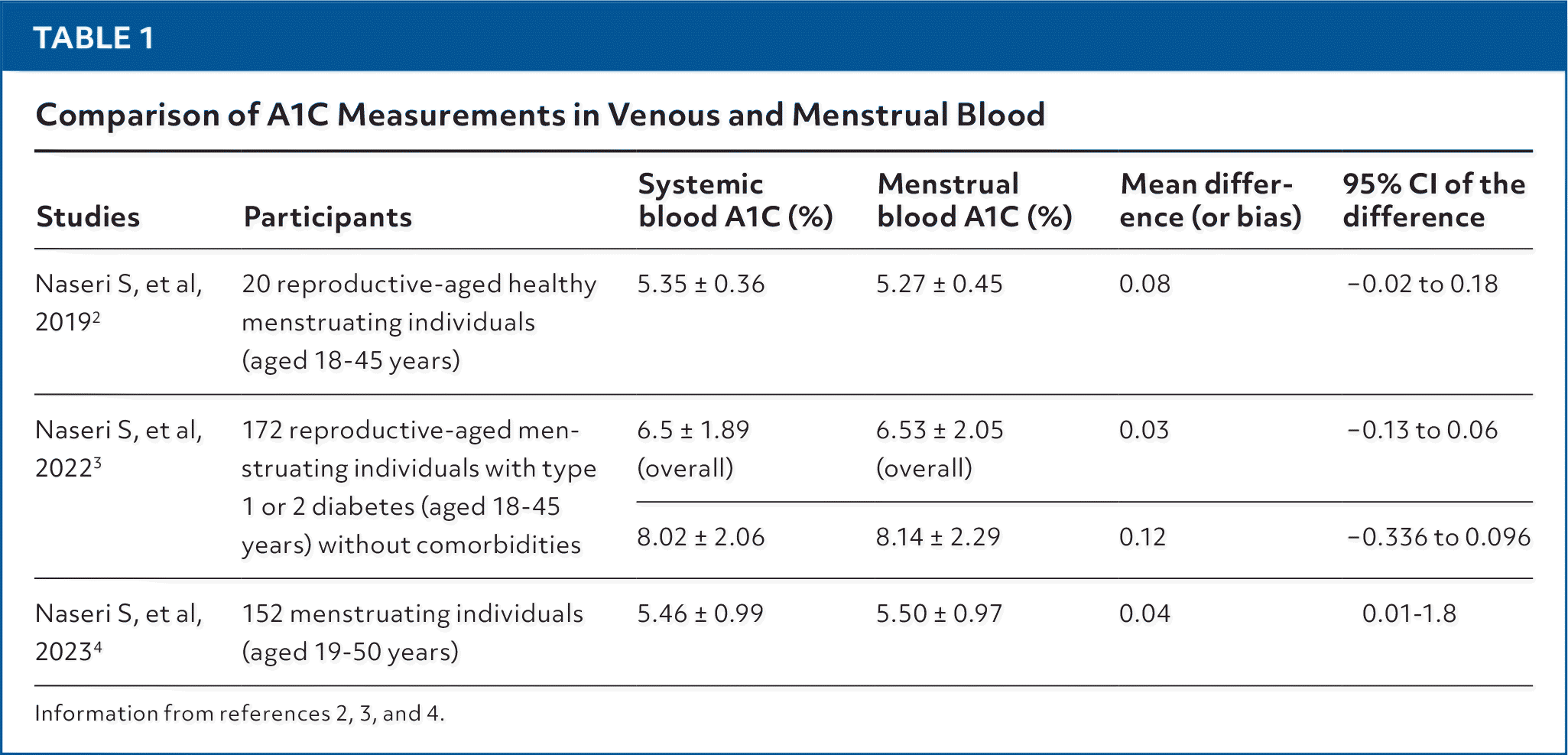
Three prospective observational studies have evaluated the accuracy of the Q-Pad Test by comparing A1C levels in paired venous and menstrual blood samples (Table 12–4). All three studies reported no statistically significant difference. The studies had small sample sizes and used venous blood as the reference standard.2–4
TABLE 1. Comparison of A1C Measurements in Venous and Menstrual Blood
| Studies | Participants | Systemic blood A1C (%) | Menstrual blood A1C (%) | Mean difference (or bias) | 95% CI of the difference |
|---|---|---|---|---|---|
| Naseri S, et al, 20192 | 20 reproductive-aged healthy menstruating individuals (aged 18–45 years) | 5.35 ± 0.36 | 5.27 ± 0.45 | 0.08 | −0.02 to 0.18 |
| Naseri S, et al, 20223 | 172 reproductive-aged menstruating individuals with type 1 or 2 diabetes (aged 18–45 years) without comorbidities | 6.5 ± 1.89 (overall) 8.02 ± 2.06 | 6.53 ± 2.05 (overall) 8.14 ± 2.29 | 0.03 0.12 | −0.13 to 0.06 −0.336 to 0.096 |
| Naseri S, et al, 20234 | 152 menstruating individuals (aged 19–50 years) | 5.46 ± 0.99 | 5.50 ± 0.97 | 0.04 | 0.01–1.8 |
BENEFIT
The Q-Pad Test is noninvasive and can be completed at home.5 The test may help eliminate barriers to care such as transportation, limited access to health care professionals, and lack of health insurance.
HARMS
Although studies have shown concordance between menstrual and venous blood A1C values, the Q-Pad Test has not been formally validated through independent, large-scale diagnostic accuracy studies, and potential sources of bias limit the generalizability of current findings. It should not be used to diagnose or screen for diabetes.4,6
The test is limited to menstruating individuals, excluding many patients. The observational trials were subject to potential selection bias, because participants often had a long-standing diabetes diagnosis. In addition, observer bias is a concern because the developers of the technology conducted the trials. The system is sold via direct-to-consumer marketing; therefore, there is the potential harm of patients not having guidance from a health care professional on how to apply the biomarker information to their individual health.
The product is not recommended for patients with hemolytic conditions, pregnancy, and significant acute or chronic blood loss or those requiring daily glucose monitoring.1
COST
A Q-Pad Test kit can be purchased from the company's website (sign up to an email list is required) for less than $50. One kit contains two Q-pads.1 The manufacturer recommends collecting samples on a day with heavy menstrual flow from two separate pads within the same cycle for comprehensive analysis. Q-Pad Test kits can also be purchased without a prescription from online retailers. No prescription or order from a health care professional is required. This test is not covered by health insurance, Medicare, or Medicaid.
Read the full article
Get immediate access, anytime, anywhere.
Choose a single article, issue, or full-access subscription.
Earn up to 14 CME credits per issue.
