Acute low back pain falls into two causal categories: specific and nonspecific. Specific causes can be intrinsic to the spine, from systemic disease, or referred pain from other organs. However, acute low back pain typically is nonspecific. Aside from recent trauma, most patients with acute low back pain do not require imaging unless history reveals red flag findings. Those with red flag findings require immediate evaluation and treatment, including imaging and specialty referral or consultation. For patients with nonspecific low back pain, first-line treatment involves maintaining activity, use of heat therapy, and other nonpharmacologic treatments (eg, dry needling, transcutaneous electrical nerve stimulation, acupuncture). Pharmacotherapy options include nonsteroidal anti-inflammatory drugs, trigger point injections, and possibly systemic corticosteroids for radicular low back pain. Drugs that should not routinely be used include benzodiazepines, gabapentin, pregabalin, opioids, and acetaminophen. Physicians should address comorbid conditions that increase the risk of acute low back pain becoming chronic. Patients with pain persisting beyond 8 weeks despite appropriate therapy should be considered for imaging and laboratory evaluation to identify specific causes.
Low back pain is a common patient concern in primary care practice. It is defined as pain between the lower posterior rib margin and the buttocks, with or without radiation to the legs. Acute low back pain is defined as pain lasting up to 4 weeks, subacute low back pain as lasting 4 to 12 weeks, and chronic low back pain as lasting more than 12 weeks.1 This review focuses on acute low back pain, which often causes concern for patients because of its sudden onset, pain severity, and frequent lack of an identifiable inciting event or cause. Chronic low back pain in adults was reviewed in the March 2024 issue of American Family Physician.2
SORT: KEY RECOMMENDATIONS FOR PRACTICE
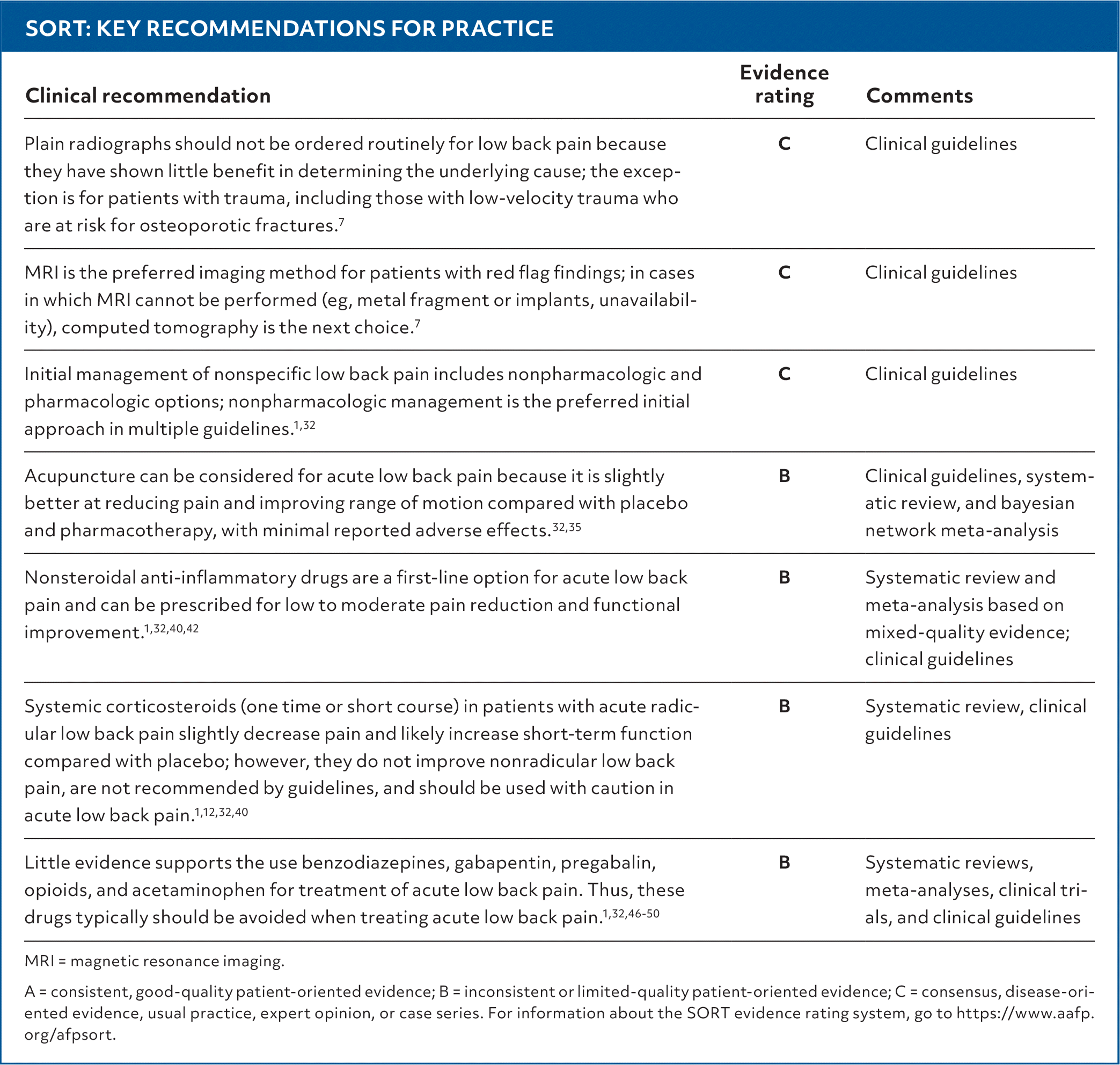
| Clinical recommendation | Evidence rating | Comments |
|---|---|---|
| Plain radiographs should not be ordered routinely for low back pain because they have shown little benefit in determining the underlying cause; the exception is for patients with trauma, including those with low-velocity trauma who are at risk for osteoporotic fractures.7 | C | Clinical guidelines |
| MRI is the preferred imaging method for patients with red flag findings; in cases in which MRI cannot be performed (eg, metal fragment or implants, unavailability), computed tomography is the next choice.7 | C | Clinical guidelines |
| Initial management of nonspecific low back pain includes nonpharmacologic and pharmacologic options; nonpharmacologic management is the preferred initial approach in multiple guidelines.1,32 | C | Clinical guidelines |
| Acupuncture can be considered for acute low back pain because it is slightly better at reducing pain and improving range of motion compared with placebo and pharmacotherapy, with minimal reported adverse effects.32,35 | B | Clinical guidelines, systematic review, and bayesian network meta-analysis |
| Nonsteroidal anti-inflammatory drugs are a first-line option for acute low back pain and can be prescribed for low to moderate pain reduction and functional improvement.1,32,40,42 | B | Systematic review and meta-analysis based on mixed-quality evidence; clinical guidelines |
| Systemic corticosteroids (one time or short course) in patients with acute radicular low back pain slightly decrease pain and likely increase short-term function compared with placebo; however, they do not improve nonradicular low back pain, are not recommended by guidelines, and should be used with caution in acute low back pain.1,12,32,40 | B | Systematic review, clinical guidelines |
| Little evidence supports the use benzodiazepines, gabapentin, pregabalin, opioids, and acetaminophen for treatment of acute low back pain. Thus, these drugs typically should be avoided when treating acute low back pain.1,32,46–50 | B | Systematic reviews, meta-analyses, clinical trials, and clinical guidelines |
MRI = magnetic resonance imaging.
A = consistent, good-quality patient-oriented evidence; B = inconsistent or limited-quality patient-oriented evidence; C = consensus, disease-oriented evidence, usual practice, expert opinion, or case series. For information about the SORT evidence rating system, go to https://www.aafp.org/afpsort.
Read the full article
Get immediate access, anytime, anywhere.
Choose a single article, issue, or full-access subscription.
Earn up to 14 CME credits per issue.