

Gastroesophageal reflux is a common physiologic event in infants in which gastric contents pass from the stomach into the esophagus. Gastroesophageal reflux may be asymptomatic or cause regurgitation or “spit up.” This occurs daily in approximately 40% of infants. Symptoms often begin before 8 weeks of life, peak at approximately 4 months of age, and usually resolve by 1 year. The prevalence of gastroesophageal reflux is 2% to 8% in children and adolescents. Family physicians should reassure parents that gastroesophageal reflux is self-limited, not pathologic, and does not warrant routine testing or pharmacologic treatment. Gastroesophageal reflux may progress to gastroesophageal reflux disease when the reflux leads to troublesome symptoms (eg, recurrent postprandial expressions of distress or pain, coughing, choking) or causes complications, such as esophageal stricture or reflux esophagitis. Diagnostic tests, such as endoscopy, barium study, multichannel intraluminal impedance, and pH monitoring, may be used when there is diagnostic uncertainty or alarm symptoms are present (eg, bilious or projectile vomiting, hematemesis). Conservative treatments for gastroesophageal reflux disease in infants include the use of thickening agents or extensively hydrolyzed or amino acid–based formulas in formula-fed infants or maternal elimination of dairy for infants who are fed breast milk. Infants and children who do not improve with conservative measures may require pharmacologic treatment, including an empiric trial of acid-suppression therapy for 4 to 8 weeks.
Gastroesophageal reflux is a common physiologic event in infants in which gastric contents pass from the stomach into the esophagus. In healthy infants, this may occur multiple times per day and is often associated with feedings. Gastroesophageal reflux may be asymptomatic or result in regurgitation or vomiting. Regurgitation, or “spit up,” occurs when gastric contents passively move into the pharynx or mouth, whereas vomiting is a forceful expulsion of gastric contents via a coordinated autonomic and voluntary motor response.
SORT: KEY RECOMMENDATIONS FOR PRACTICE
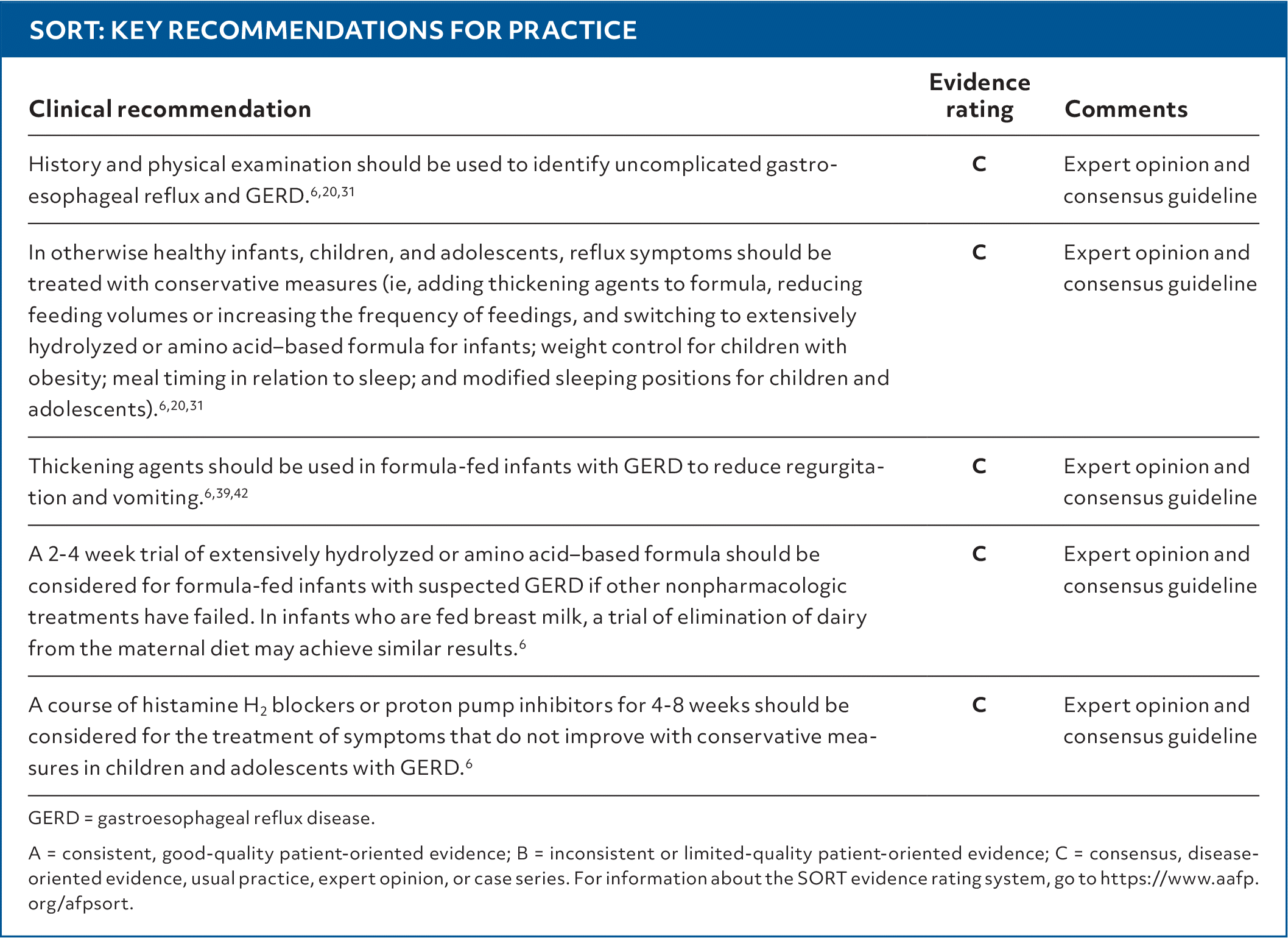
GERD = gastroesophageal reflux disease.
A = consistent, good-quality patient-oriented evidence; B = inconsistent or limited-quality patient-oriented evidence; C = consensus, disease-oriented evidence, usual practice, expert opinion, or case series. For information about the SORT evidence rating system, go to https://www.aafp.org/afpsort.
Read the full article
Get immediate access, anytime, anywhere.
Choose a single article, issue, or full-access subscription.
Earn up to 14 CME credits per issue.
