
Adult immunization toolkit for patients age 50+

Clinician toolkit for improving immunization rates in adults 50+. Gain guidance on vaccines for seniors including COVID, flu, RSV and practical strategies for patient counseling.
Patients often reflect on their personal health when they reach the age of 50. Immunizations are an important part of that picture, and patients depend on clear recommendations from their physician to know which vaccines they need.
The AAFP has developed an adult immunization toolkit to help family physicians review vaccine needs, make clear recommendations and answer patient questions. The resources support stronger immunization workflows across the entire clinical setting, including an infographic that helps care teams prepare and a fact sheet to guide patient conversations.
Adult immunization toolkit resources
Use this toolkit based on what you need in the moment, whether that’s preparing for the next patient, checking current recommendations or improving how you administer shots for older adults in your practice. Each resource is designed to support a different part of adult immunization care.
How to use this toolkit in clinical practice
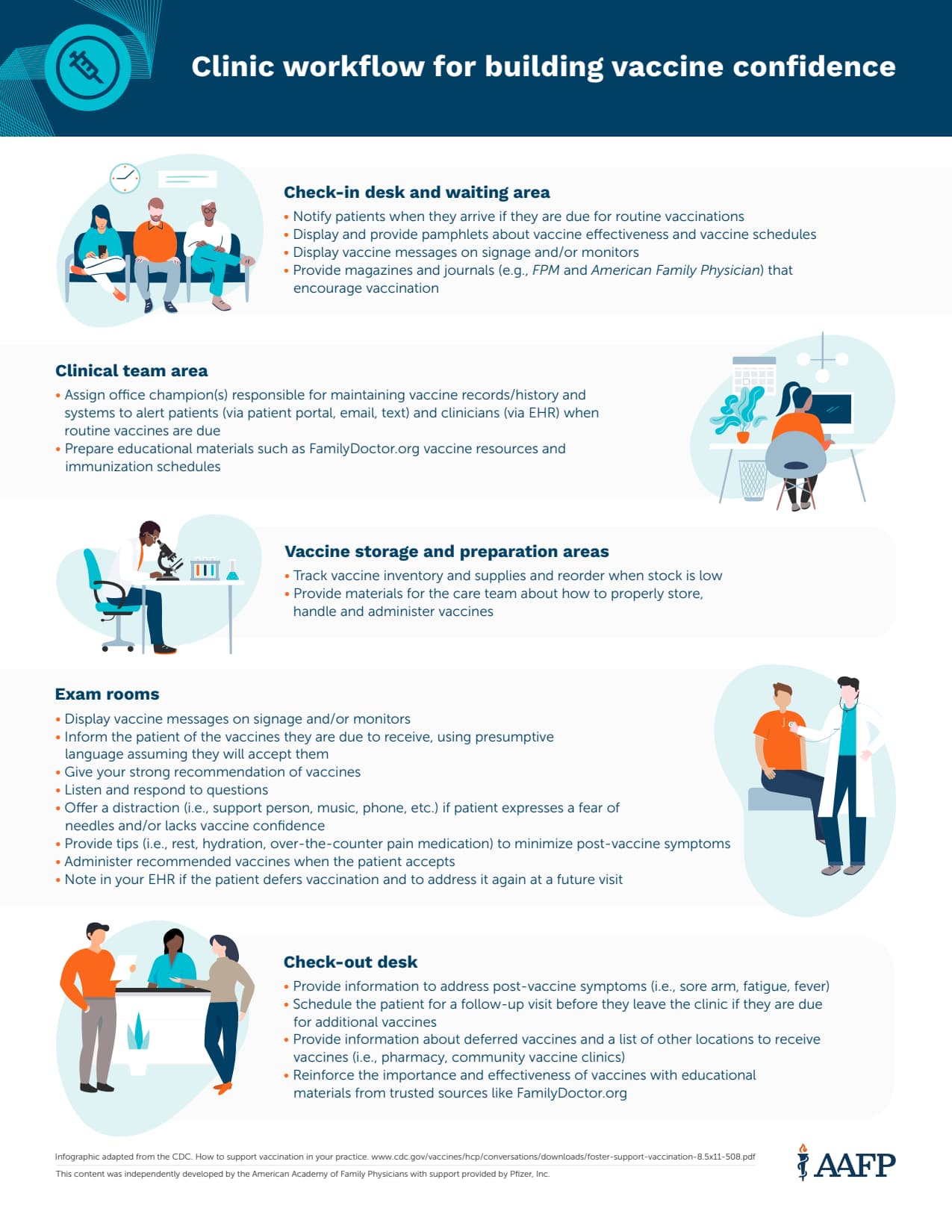
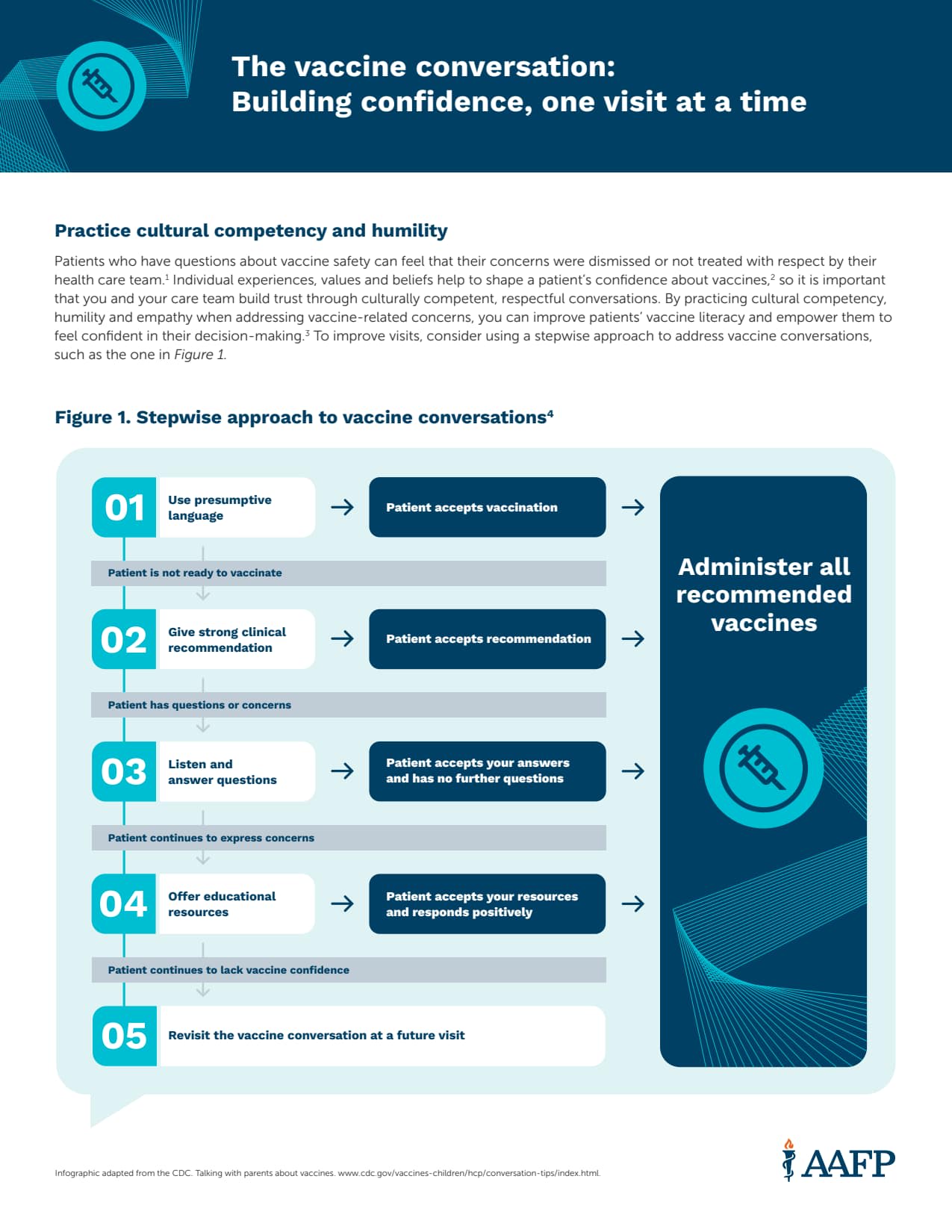
Start by reviewing patient records and current recommendations to identify possible gaps in vaccine coverage. The Clinic Workflow for Building Vaccine Confidence infographic shows how each member of the care team can help with next steps. Meanwhile, The Vaccine Conversation: Building Confidence, One Visit at a Time fact sheet provides guidance for making clear recommendations and responding to patient questions.
The toolkit also introduces the Office Champions Quality Improvement model, the Action Plans and PDSA Cycles Guide, and an Action Plan Form. These supporting resources can help your team identify a goal, test a small change and document its impact on your immunization workflow.
What vaccines are recommended after age 50?
Seniors’ regular primary care visits create routine opportunities to review which currently recommended vaccines for adults over age 50 are right for them, based on their age, health conditions, prior vaccinations and risk factors.
Making effective recommendations reaches beyond the walls of your exam room, though. Every member of the care team can help identify vaccine needs, reinforce recommendations and answer questions during the visit. A clear recommendation from a trusted care professional can help patients make informed decisions about vaccines as adults.
Why focus on immunizations for older adults?
Some recommendations to be familiar with depending on individual patient details include:
Flu vaccines for seniors
COVID-19 vaccines
RSV immunizations
Pneumococcal vaccines
Zoster (shingles) vaccines
MMR vaccines for seniors
Tdap vaccines
The best thing you can do for your patients is help them understand what’s recommended for them. The AAFP’s Immunization Schedule for Adults can be used to confirm recommendations, align timing and decide what to do in special situations. A patient-facing version offers a simpler overview that you can share before, during or after the visit.
How often should seniors get COVID-19 boosters?
The AAFP recommends two doses of an updated COVID-19 vaccine for adults 65 years and older each season, with doses administered six months apart.
Identifying vaccination gaps in patients age 50+
A good first step is reviewing the records you already have, including the EHR, state immunization information and the patient’s history. Leading up to the visit, sending email alerts or text reminders can flag potential gaps, and an office champion or other designated team member can help keep things organized. You should then lean on AAFP recommendations to determine the path forward.
Integrating immunization reviews into visits
Immunization reviews are most effective when built into a visit. Check-in staff can flag needs, clinical staff can confirm records, and clinicians can answer any questions and administer shots when appropriate. Once the visit is done, staff can reinforce next steps and arrange follow-up care at check-out. Ensure that you document vaccinations, referrals and deferrals so there is a clear record for the future.
Addressing patient questions about vaccines
Questions about side effects, ingredients or other concerns are a normal part of vaccine conversations. The fact sheet lays out a clear five-step path to follow when responding:
- Use presumptive language.
- Give a strong recommendation.
- Listen to and answer questions.
- Offer educational resources.
- Revisit the conversation if the patient defers.
Stay empathetic throughout the conversation and avoid debating misinformation or flooding the conversation with facts.
Improving vaccine uptake in older adults
To improve immunization uptake, look for opportunities to make adult vaccinations a simple, routine part of care for patients age 50 and older. Clear recommendations, consistent communication and attention to any hesitancy can help patients feel at ease and make informed decisions.
Communication strategies for vaccine confidence
When patients have questions about vaccines, focus initially on finding the root of the concern. Ask open-ended questions and listen closely to their answers. Respond with information that is relevant and if they still have questions, take note and revisit it later. The conversation should be centered around the clear recommendation; shared clinical decision-making should only be used when the recommendation specifically calls for it.